Temple Mills lies in the lower Lea Valley of East London. Historically, it was the site of a major marshalling yard and wagon works operated by the Great Eastern Railway. Its name comes from a mill on the River Lea once owned by the Knights Templar.
In 1836, the Northern and Eastern Railway Company was authorised to build a railway from London to Cambridge through the marshes at Temple Mills. This marked the beginning of the area’s long association with the railway industry—one that continues today.
Industrial expansion and railway development
In 1891, the East London Water Company connected its extensive Lea Bridge works to Temple Mills by private siding. The nearby Lea Bridge gasworks, established in 1853 by the South Essex Gaslight and Coke Company, also had rail sidings beside the railway yard.
The Great Eastern Railway opened Temple Mills Wagon Works in 1896 on a 23-acre site east of the Stratford–Lea Bridge line, accessed from Temple Mills Lane. Wagon construction and maintenance had previously taken place at the original Stratford Works.
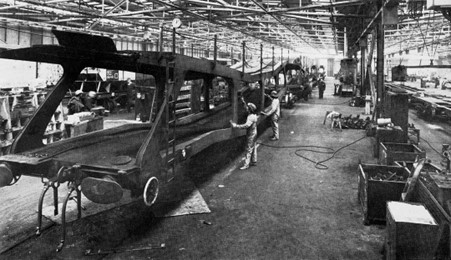
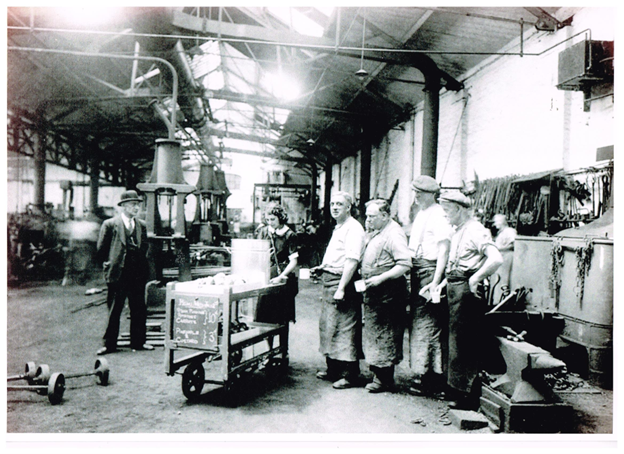
By 1921, the works employed 800 men. Each week, they built ten new wagons and repaired around 500 others. Workers also produced steel carriage frames, which were sent to Stratford for completion. The works included wagon erecting, smithing, fitting and machine, wheel, steel-frame, straightening, and sawmill shops, as well as an Erith Timber Dryer—reflecting the continued use of wooden wagons at the time.
Modernisation and technological change
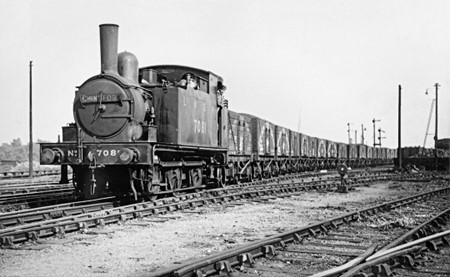
Temple Mills marshalling yard began operating in the 1930s. Following the Second World War, British Railways expanded it substantially under its Modernisation Plan, adding 52 miles of track and installing a hump yard with electronic equipment to automate wagon formation.
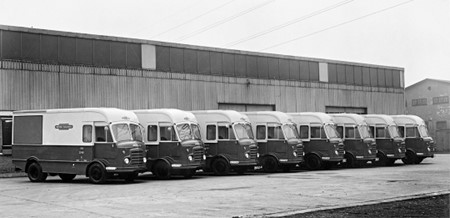
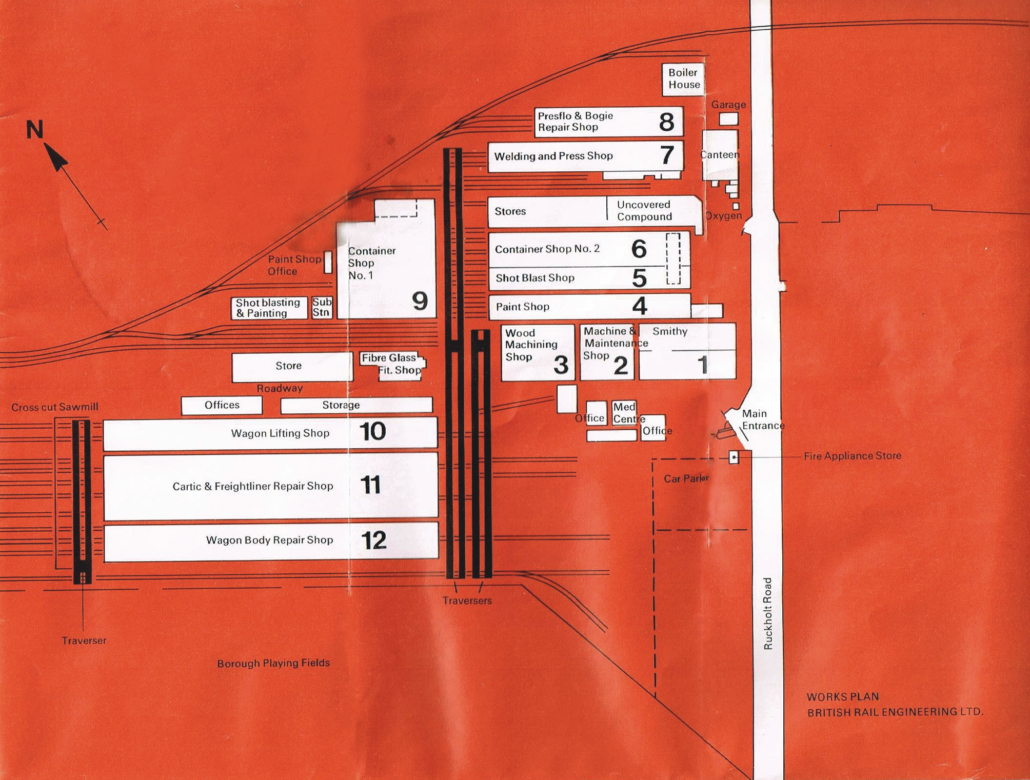
British Railways took over the works in 1948 and built a new eight-road wagon repair shop on the western edge of the site, served by a wagon traverser. The enlarged marshalling yard opened in 1958, when the site also began producing road vehicles.
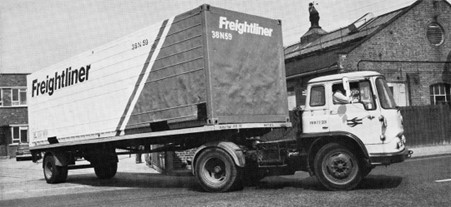
During the 1960s, the growing motorway network shifted much freight traffic from rail to road. Even so, the works contributed to the design of early Freightliner containers and the Cartic car-carrying wagon. In 1970, the facility became part of British Rail Engineering Limited and included a workshop for repairing road vans, containers and barrows. Over its lifetime, the works are believed to have built more than 33,000 wagons.
Closure and transition
Temple Mills was known for two named freight services: the Lea Valley Enterprise and the Essex Enterprise. The wagon works closed in 1983.
After Stratford’s diesel repair shop closed in 1991, English Welsh and Scottish Railway opened a small traction maintenance depot at Temple Mills, code TD. It closed in 2007 after changes in the freight market made it financially unviable.
Temple Mills today
Today, the site is known as Orient Way Carriage Sidings and is used to stable electric multiple-unit trains. Temple Mills is also home to the UK maintenance depot for Eurostar’s fleet. Located near Stratford International and the edge of the Olympic Park, it replaced the North Pole depot in late 2007 alongside the opening of the international terminal at St Pancras. The facility can accommodate eight train roads.
With a railway heritage stretching back nearly two centuries—and a wider local history reaching over 2,000 years—Temple Mills remains an important part of East London’s industrial and transport story.