The Origins of the Red London Bus
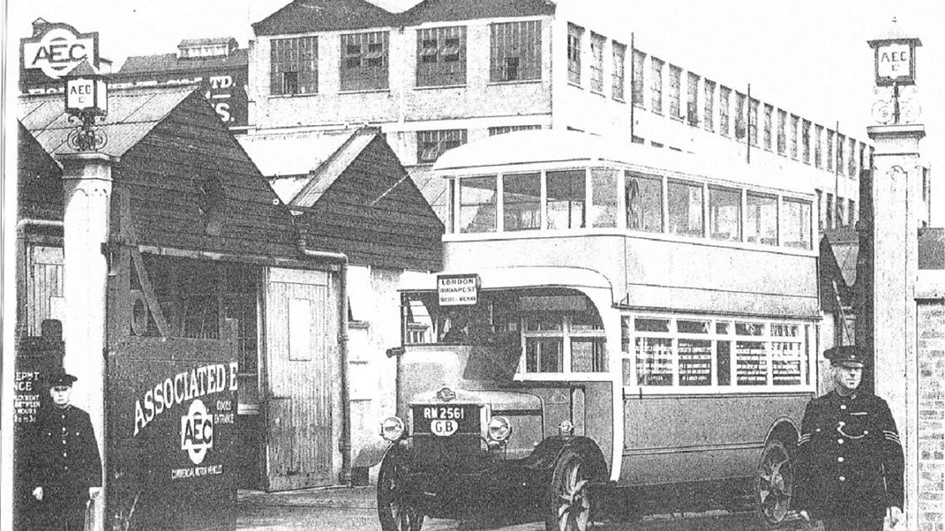
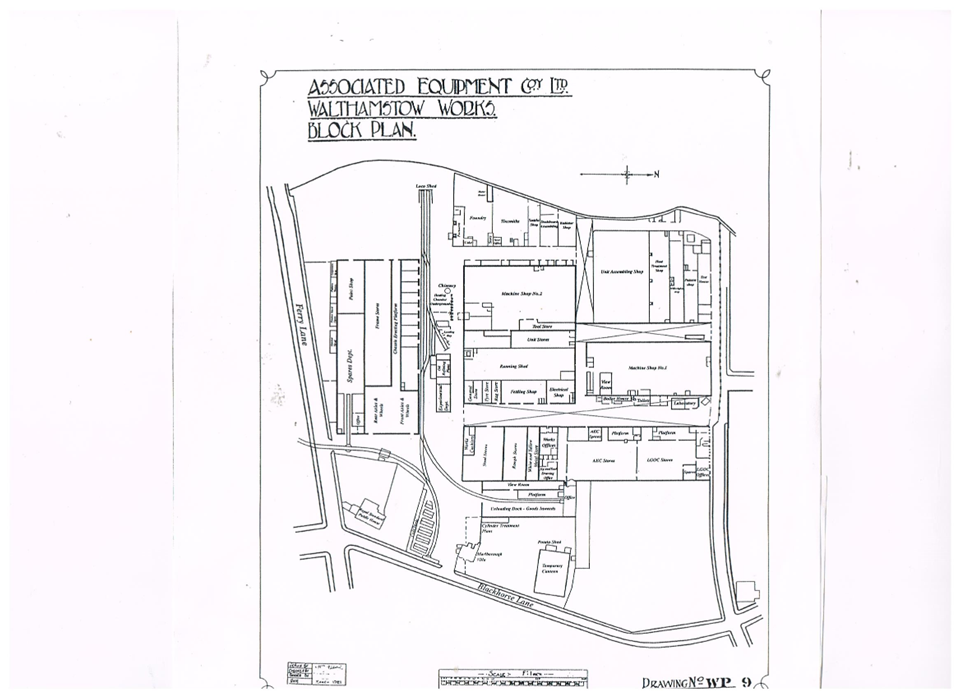
The London’s red buses are known throughout the world being even today used in many cities as tourist buses. They have always been mostly painted red which dates to the time of the London General Omnibus Company which is explained in the next section. The Routemaster bus is possibly the most famous of them all with some of them even still being used in London today on Transport for London’s bus service routes some 65 years after the first prototype appeared at the Commercial Vehicle Show in London in 1954.The company that manufactured these buses was called the Associated Equipment Company which was founded in Walthamstow in 1912 and closed in Southall in 1979 after a great deal of controversy. That was really the end I am afraid to say of buses built to last as my last testament proves.
How it all Began
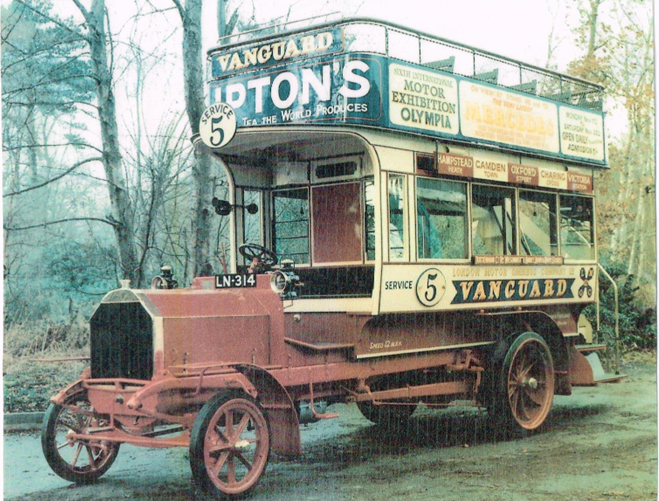
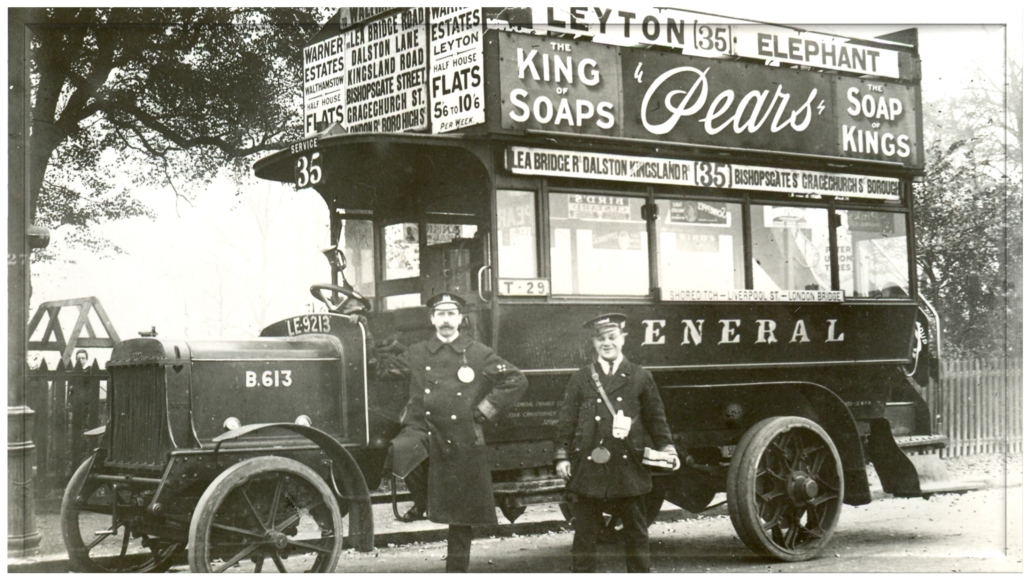
In the early 1900s a man called Arthur Salisbury Jones a City of London stockbroker had a vision to start large scale motorised bus operations all over the United Kingdom. However, at that time the petrol motorbus still had a long way to go to catch up with the horse bus operations in London. So, in 1905 Arthur Salisbury Jones started the London Motor Omnibus Company which first operated from a small tin hut in Hookers Road Walthamstow. It was from then onwards that the company started to become a serious competitor to the now outdated horse bus operations in London. Arthur Salisbury Jones had a vision which was not just to control all the bus operations in the United Kingdom but to also build buses and lorries at his works in Walthamstow. Soon other trading arms of the company were started. The problem with this was that the company had to purchase so many different parts of equipment to construct these buses and commercial vehicles that his vision soon began to become unrealistic. Despite many setbacks in production the company started to assemble vehicles that might one day he believed would become world beaters, however, only a few London Motor Omnibus Company vehicles were eventually constructed. To overcome his growing fleet operational difficulties Arthur Salisbury Jones then decided to purchase the smart and reliable Miles Daimler bus built in Germany to use on his bus services in London. His decision to buy these buses soon started to pay off with the public preferring to ride on his slick warm lit buses than a cold, damp, and overcrowded horse bus. Hence to say the demise of the horse bus operations in London was now not far away. The company’s telegraphic address was” VANGASTOW” which was derived from the words Vanguard the companies bus operating name, and Walthamstow the home of the company. There was no doubt that this petrol motor bus mode of transport was now the best way forward. By then there were also several other London bus operators who also began to expand their operations and fleets in London. The London Motor Omnibus Company by then had also expanded its premises and operations at Hookers Road. With additional overheads, and now fewer passengers using the company’s buses began to take its toll on the company’s cash flow. A very bad winter in 1907 saw the entire London bus operator’s passenger traffic decline dramatically to a new low, and the repair costs now soaring to unsustainable levels. The London Motor Omnibus Company had no other alternative than to seek out other partners to save the company. Waiting in the wings was the London General Omnibus Company who was then still struggling to move forward from horse bus to petrol bus operations in London. An amalgamation or takeover with the London General Omnibus Company soon followed, making them overnight the largest petrol bus operators in London. It should however be noted at this point it was the London Motor Omnibus Company which could only make this claim. The General now not only inherited 885 buses but a very useful large works at Walthamstow. The stage was now set for greater things to come for the London General Omnibus Company. Now requiring to further enhance its fleet and operations in London, the company soon found out that the current other motor buses now on offer from various manufactures were just not mechanically reliable and sound enough for them to purchase. A decision was then taken that the company would build their own buses to their own specifications at their newly acquired premises in Walthamstow. By then the Metropolitan Police had laid down very stringent guidelines for this and all future bus operations in London. Buses had to be no more than 23ft long and 7ft 2 inches wide with a maximum seat capacity of 34, 18 up and 16 down, and with a weight of no more than three and a half tons unladen, and six tons laden. Frank Searle, the Generals new chief motor engineer immediately set about designing a new bus which incorporated the best features of all the other maker’s types of buses that would conform to these new regulations. The first prototype bus was named the X and was a great success. The B Type bus design soon followed which was also constructed at the Walthamstow works. This was the first standardised built bus in the world. The B type bus now gave the General the firm foundation it required, proudly proclaiming to the world “Open air buses to everywhere” The company’s buses were all painted red to clearly distinguish the general’s buses from other operators. Other manufactures suddenly found themselves with two big problems, the Metropolitan Police regulations, and their past customers now buying only the new London General Omnibus Company buses. At about this time Daimler were also appointed to sell any surplus chassis made at Walthamstow. As the competition grew Daimler managed to lure away Frank Searle to start designing their own commercial vehicles for them. Orders for the B Type bus were now flooding in, which had not gone unnoticed by the Underground Electric Railways Group who saw the growth of the General bus operations a direct threat to their own growing railway empire. The Underground Group then started to buy up the London General Omnibus Company’s shares and by 1912 had gained control of the company. However, the Underground Group also wished to continue with the building of buses and commercial vehicles at Walthamstow. The company then decided to set up a new trading arm which would enable them to do this. The new trading named was called the Associated Equipment Company or known today by millions of people all around the world as just AEC. As the company began to grow further World War One had now began which brought the development of motor buses in Britain to a grinding halt. By then the company had been producing about 28 new B Type buses a week, with a grand total of 3,000 finally being produced. Not all of these were open top double decker’s, but charabancs, single decker’s, lorries, and parcel vans, which were all being designed and constructed around the B Type chassis.
The First World War
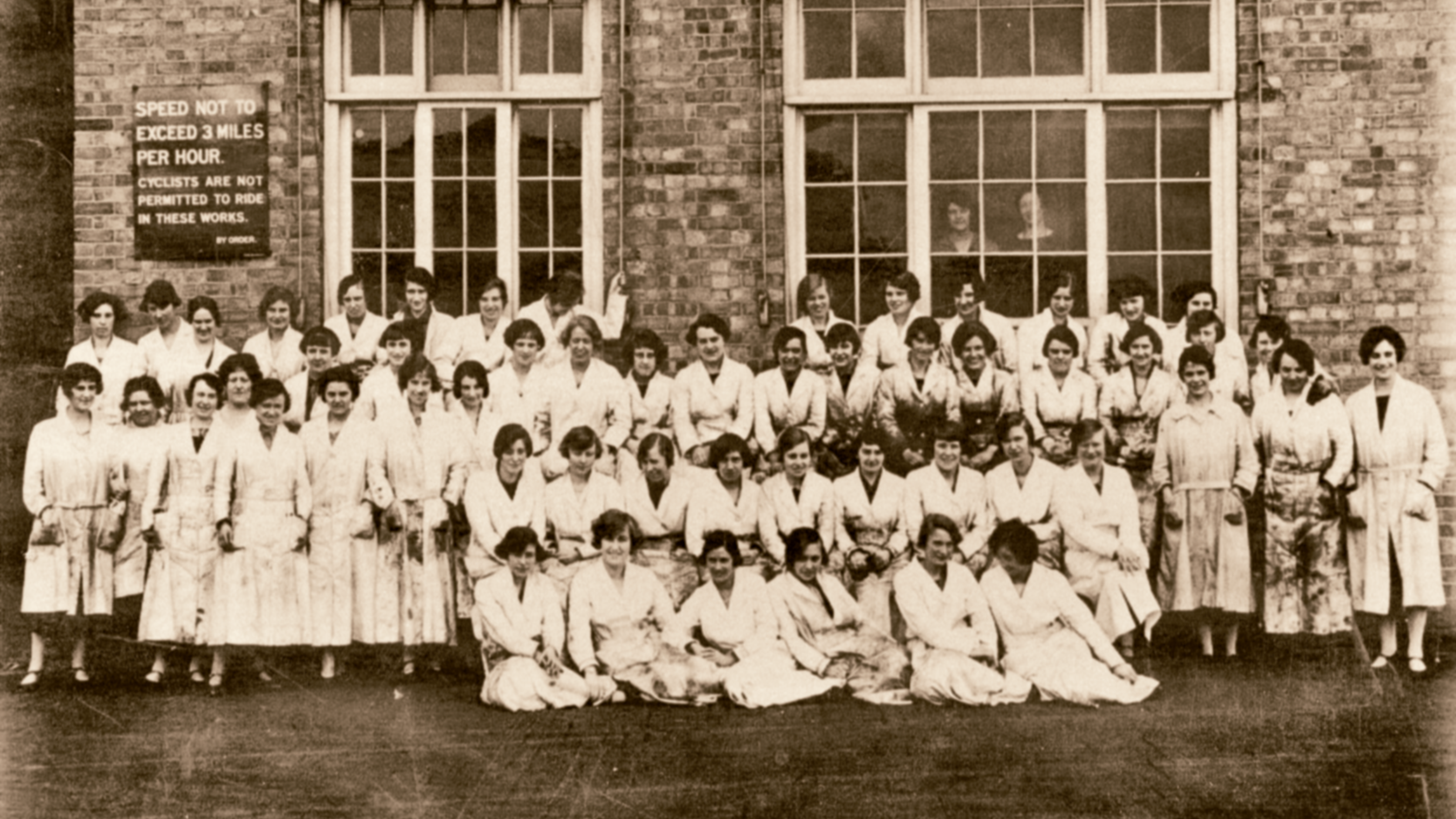
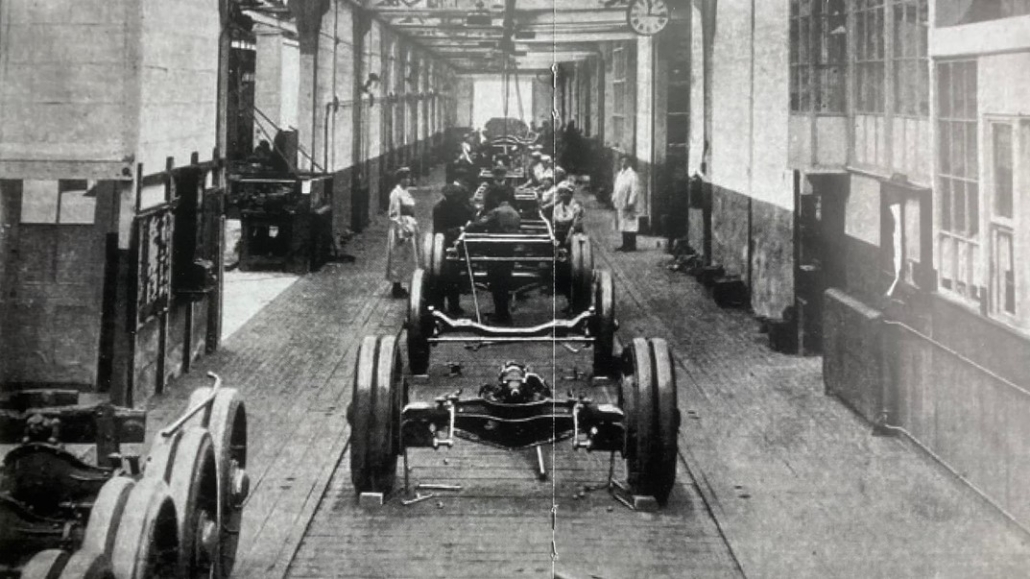
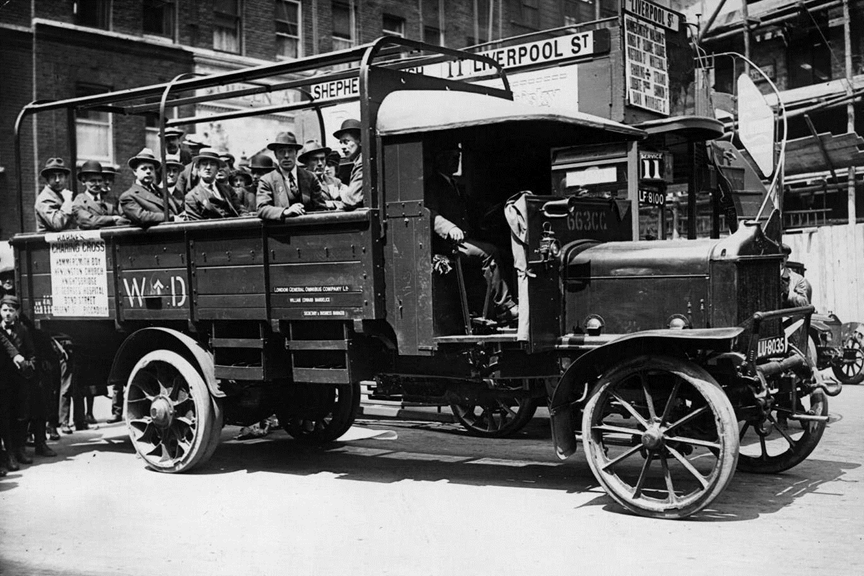
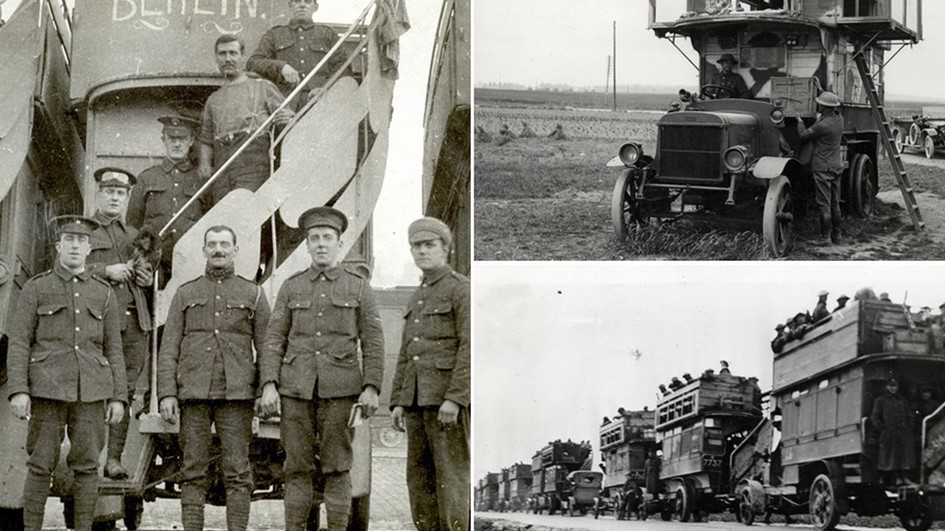
The war years started to see a severe test for the vehicles and those at Walthamstow responsible for their production. The B Type bus was adapted as a troop carrier with some 1,300 being acquired by the War Department. Most of these saw service in France, hence the famous saying” Born in Walthamstow, and Died in France”. 300 B Types buses were also used for defence work in London. During this wartime period the bus also received a nick name of “The Old Bill Bus”, however, a far greater test was now being placed on the company as it was now entrusted with the production of thousands of trucks for military duties. A new robust pressed steel frame vehicle was required to be powered by a 45hp petrol engine and have a four-speed crash gearbox which would be able to carry a heavy load. Enter the Y Type 3-4-ton truck. By the end of World War One 10,000 had been manufactured in Walthamstow which represented 40 percent of the total vehicles built for the three-Armed Forces. By then the factory at Walthamstow had been expanded and with this came a moving trackway assembly line which was unique in Britain at that time. It was also stated that the company then produced a new truck every 30 minutes. The factory had now grown from a workshop area of 3000 sq. ft to an amazing 483,000 sq. ft. With the war now over the task of re-equipping London’s bus fleet was embarked upon. The company then moved on to the not only building different types of London Buses, but lorries, and even early trolley buses at Walthamstow until 1927 when it moved to Southall to a much-needed larger factory which eventually closed in 1979.
Tractors Built at Walthamstow
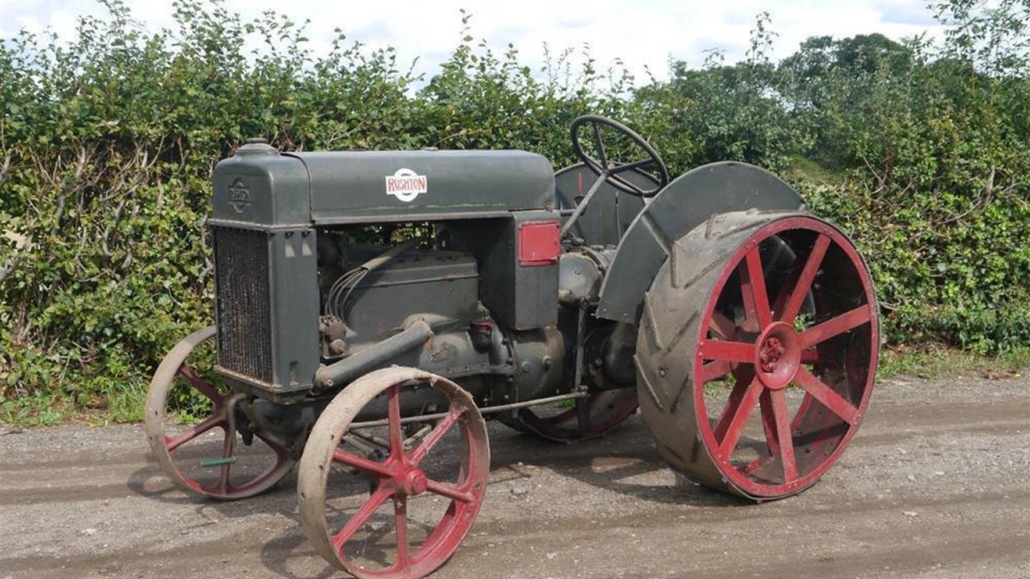
Although the Walthamstow factory appeared to be closed in 1927 an arm of the company which built tractors continued to use the site until 1933. George Rushton, who worked as an engineer for the company persuaded his employers to let him design a tractor that would be able to compete with Henry Ford’s Ubiquitous Fordson. Rushton’s first tractor appeared in 1928 as the “General”, but this was soon changed to the “Rushton”. Many parts on the Rushton were interchangeable with those of the Fordson, but it also offered some advantages over the latter, such as a larger radiator, magneto ignition and increased power “Almost 24 hp compared to around 21 hp for the Fordson”. Several Rushton conversions were produced by various firms, including a full-track conversion with roadless tracks, a roller conversion by Taskers and several industrial variants from Muir-Hill, however, sales of the Rushton were not forthcoming, perhaps due to the higher price than the Fordson or the effects of the depression, and tractor production ended in 1933. From what was just a vision in 1905 the company was now a large commercial vehicle manufacturing enterprise. The company could now proudly claim “That it was the builders of London’s buses” the truth is that it was more than just that.