Part One: Builders of London Buses and Commercial Vehicles 1905 -1912
(How it all began, from a small tin hut in Hookers Road Walthamstow in the early 1900s)
Arthur Salisbury Jones, a City of London stockbroker, had a vision to start large-scale motorised bus operations all over the United Kingdom. However, at that time, the petrol motorbus still had a long way to go to catch up with horse bus operations in London. In 1905 Arthur Salisbury Jones started the London Motor Omnibus Company which first operated from a small tin hut in Hookers Road Walthamstow. From then onwards, the company started becoming a serious competitor to outdated horse bus operators in London.
Arthur Salisbury Jones’ vision was not just to control all the bus operations in the United Kingdom, but also to build buses and lorries for the country at his works in Walthamstow. The problem was that the company had to purchase so many different parts to construct these buses and commercial vehicles that his vision soon began to take a back seat. Despite many setbacks in production, the company started to assemble vehicles that may one day become world-beaters; however, only a few London Motor Omnibus Company vehicles were eventually manufactured. To overcome these difficulties, Arthur Salisbury Jones then decided to purchase the smart and reliable Miles Daimler bus, built in Germany, to use on his bus services in London. His decision to buy these buses soon started to pay off, with the public preferring to ride on his slick, warm, lit buses rather than a cold, damp, and overcrowded horse bus. Hence, the demise of the horse bus operations in London was not far away.
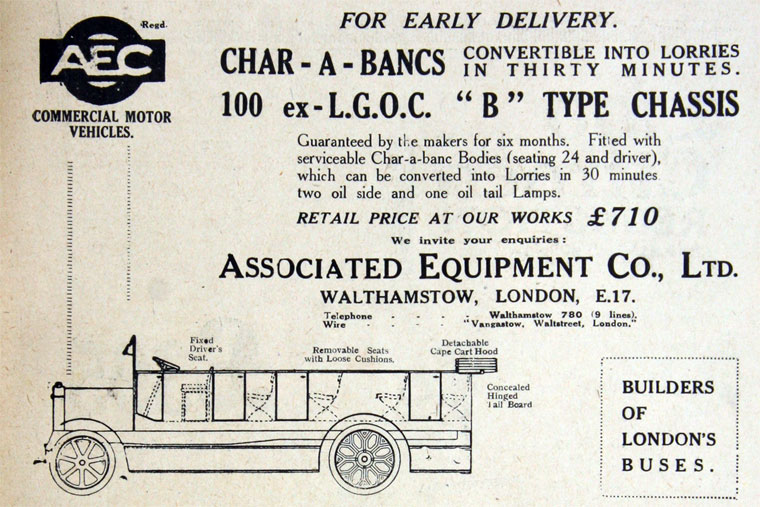
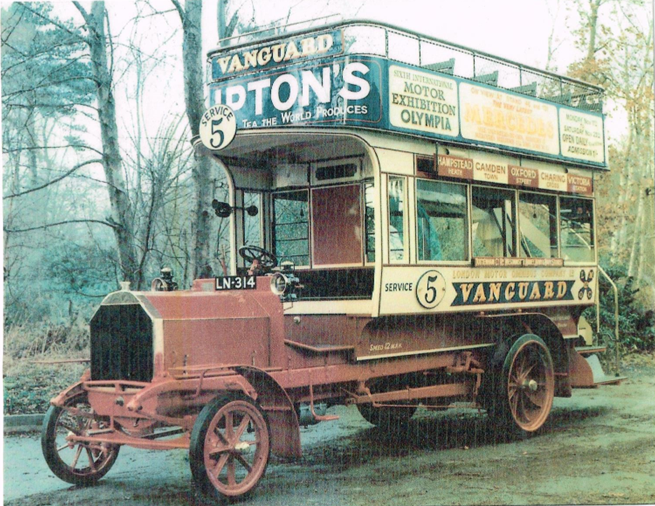
The company’s telegraphic address was” VANGASTOW” which was derived from the words Vanguard, the company’s bus operating name, and Walthamstow, the home of the company. There was no doubt that this petrol motor bus mode of transport was now the way forward. Many other London bus operators also began to expand by then their bus operations and fleets in London. The London Motor Omnibus Company had by then also expanded its premises and operations at Hookers Road. With additional overheads and now fewer passengers using the company’s buses, it began to take its toll on the company’s cash flow. A very bad winter in 1907 saw the entire London bus operator’s passenger traffic decline dramatically to a new low, and the repair costs now soared to unsustainable levels. The London Motor Omnibus Company had no other alternative but to seek out other partners.
Waiting in the wings was the London General Omnibus Company,which was still struggling to move forward from horse bus to petrol bus operations in London. An amalgamation or takeover with the London General Omnibus Company soon followed, making them the largest petrol bus operators in London overnight. The General now not only inherited 885 buses, but also a very useful large factory at Walthamstow.
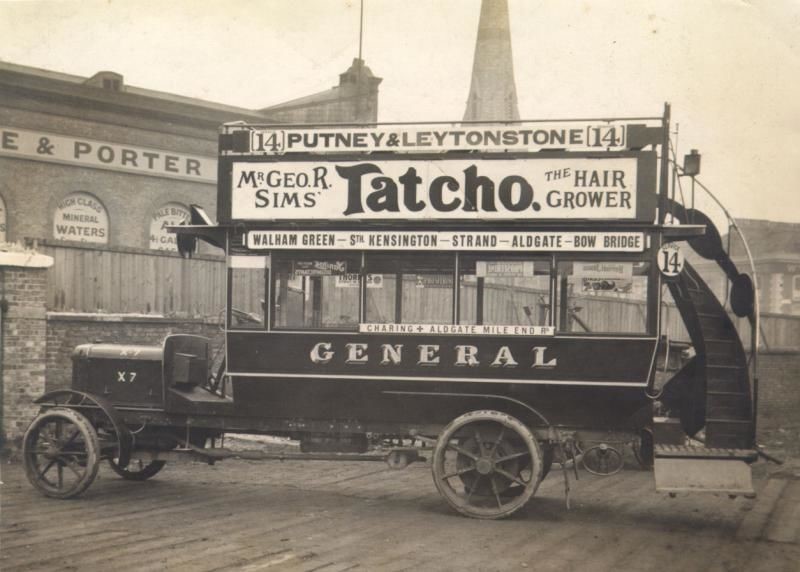
The stage was now set for greater things to come for the London General Omnibus Company. Now requiring to enhance its fleet and operations in London further, the company soon found out that the current motor buses now on offer from their newly acquired premises in Walthamstow were not satisfactory. By then, the Metropolitan Police had laid down very stringent guidelines for bus operations in London. Buses had to be no more than 23ft long and 7ft 2 inches wide with a maximum seat capacity of 34, 18 up and 16 down, and with a weight of no more than three and a half tons unladen, and six tons laden. Frank Searle, the General’s new chief motor engineer, set about designing a bus that met with these regulations.
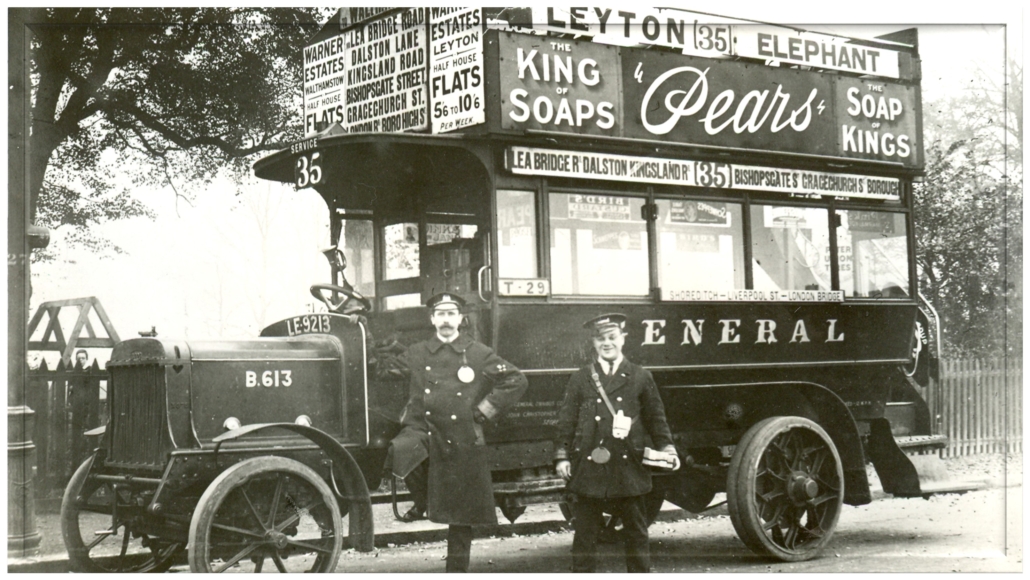
Other manufacturers suddenly found themselves with two big problems: the Metropolitan Police regulations and their customers now buying the new LGOC bus. The new prototype bus was named the X and was a great success. A total of 60 X-type buses were built, together with one lorry. The B Type design soon followed, which was also constructed at the
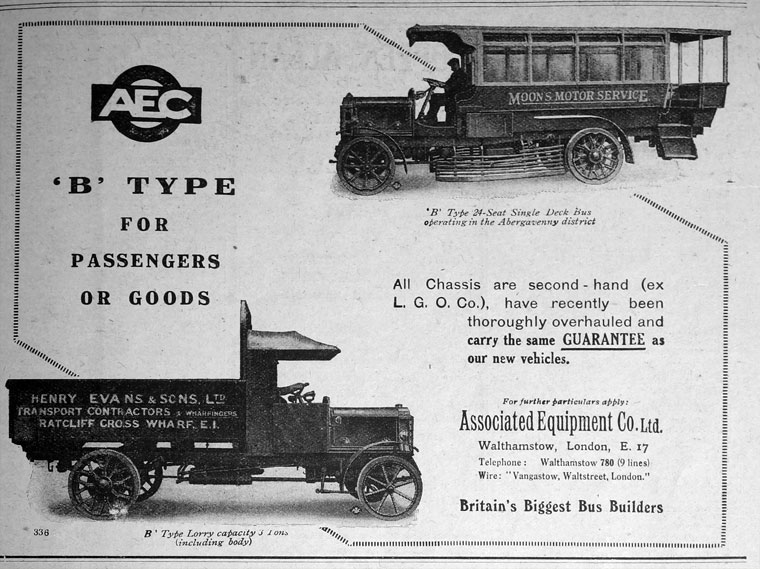
Walthamstow works. This was the first standardised-built bus in the world. The B-type bus now gave the General the firm foundation that it required, proudly proclaiming to the world, “Open-air buses to everywhere”. Orders for the B Type were now flooding in, which had not gone unnoticed by the Underground Electric Railways Group, who saw the growth of the General as a direct threat to their growing railway operations. The Underground Group then started to buy up the General Company’s shares and by 1912 had gained control of the company. However, the Underground Group also wished to continue with the building of buses and commercial vehicles at Walthamstow. It was then decided to start up a new trading arm of the company, which would enable them to do this. The new company’s trading name was the Associated
Equipment Company or known today by millions of people all around the world as just AEC.