The Thames Ironworks and Shipping Company was established at Bow Creek in 1856, previously operating as C.J. Mare and Company until financial troubles led to its closure. Bow had already seen the construction of many large ships made from wood and iron. Shortly after its founding, the company received a significant commission from the British Admiralty—to build what would become the world’s largest warship and the first sea-going ironclad.
This vessel, named HMS Warrior, launched in 1860, was powered by both sail and steam and is now preserved in Portsmouth.
It’s remarkable to think that large-scale industries such as iron works and shipbuilding thrived at the southern end of the River Lea during the 1800s. At its peak, the company manufactured marine engines, motor cars, locomotives, buses, cranes, and electrical and civil engineering equipment.
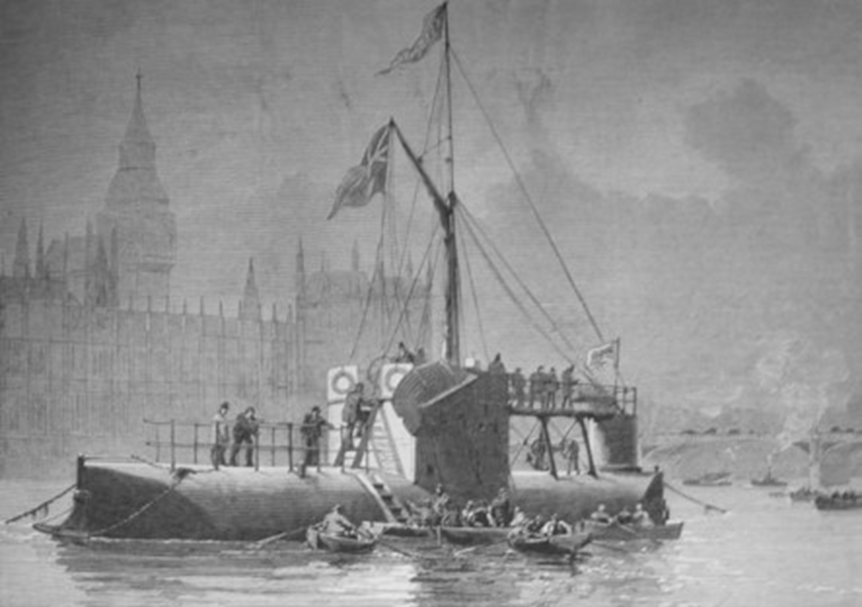
In 1877, they undertook the unusual task of constructing a 15-foot-diameter, 92-foot-long iron cylinder to transport Cleopatra’s obelisk from Egypt to London. The obelisk, known as the Needle, was erected on the Victoria Embankment beside the River Thames in 1878, where it remains today.
The company ceased operations in 1912 due to a lack of orders from the British Admiralty. This was partly due to the changing nature of warship design and competition from the larger construction yards.
The legacy of the Thames Iron Works football team endures through the emblem of West Ham United Football Club, which features two crossed gold hammers and a castle on a claret (maroon) background.