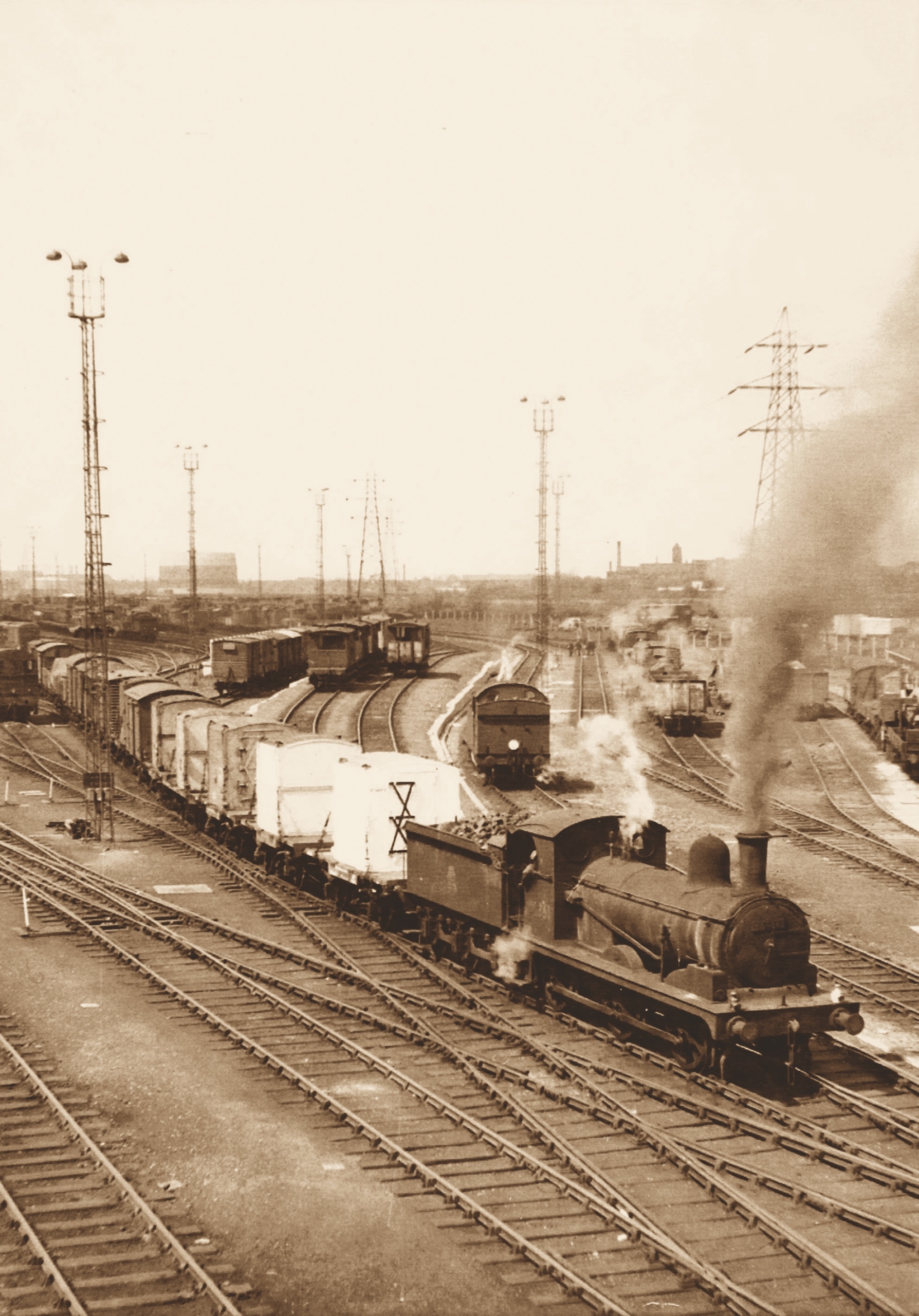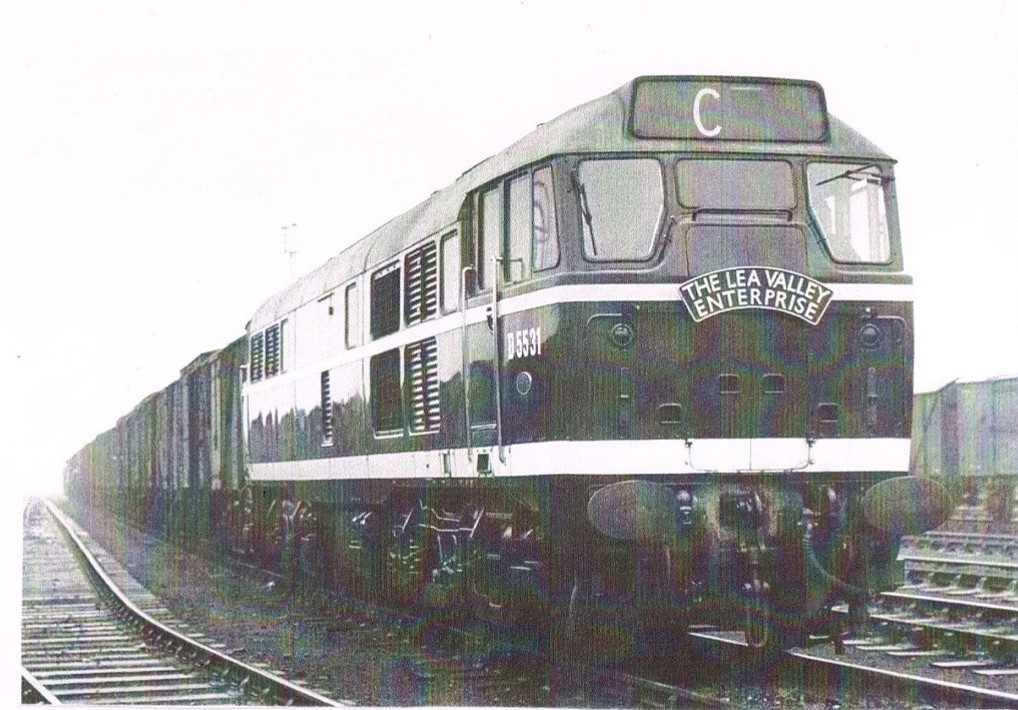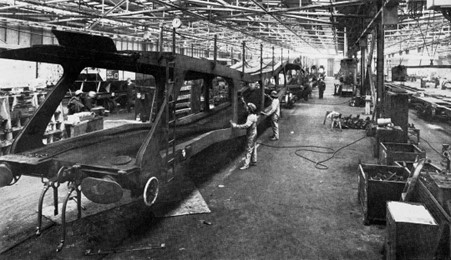
Temple Mills is situated in the lower part of the Lea Valley in East London. It was once the home to a large marshalling yard and wagon works belonging to the Great Eastern Railway. The name Temple Mills originates from a mill on the River Lea once owned by the Knights Templar. In 1836 the Northern and Eastern Railway Company obtained authority to construct a line from London to Cambridge across the marshes at Temple Mills. This was the start of its long association with the railway industry which continues today. In 1891 the East London Water Company connected its huge works at Lea Bridge to Temple Mills with a private siding. The Lea Bridge gasworks was built in 1853 by the South Essex Gaslight and Coke Co. Situated to the East of Temple Mills, it also had its own rail sidings adjacent to the railway yard. Temple Mills Wagon Works was opened in 1896 by the Great Eastern Railway on a twenty-three-acre site to the east of the Stratford to Lea Bridge line with an entrance off Temple Mills Lane. Before then wagons had been constructed and maintained in the original Stratford Works. In 1921 the works employed 800 men, producing 10 new wagons, and repairing 500 wagons every week. The works also produced steel frames for carriages that were sent to Stratford Works for completion. The 1921 guide to the works (which covered Stratford works as well) gave details of the following shops on the site: wagon erecting shop, smiths shop, fitting and machine shop, wheel, and steel frame shops, straightening shop and sawmills. The works also had an Erith Timber Dryer as most wagons at this time were made of wood. Temple Mills marshalling yard became operational in the 1930s and under the British Railways post-war Modernisation Plan when the yard was further extended with some fifty-two miles of additional track and was also equipped with a ‘hump’ and the latest electronic devices to automatically control the formation of wagons. In 1948 British Railways took over the operation of the works. Around this time a new wagon repair shop was built on the western edge of the site. This consisted of eight roads and access was by a wagon traverser. The new marshalling yard opened in 1958. British Railways also began to build road vehicles at Temple Mills. It soon became evident during the 1960s that because of the expansion of the motorway network more freight was being carried by road. In the 1960s the works designed early freightliner containers and the Cartic car carrying wagon. In 1970 the works became part of British Rail Engineering Limited. At this time there was also a workshop known as the new road van shop that dealt with repairs to road vans, containers, and barrows etc. It is said that the works have constructed over thirty-three thousand wagons since it opened. Temple Mills yard also had two named freight trains called the Lea Valley Enterprise and the Essex Enterprise. The works closed in 1983. When the residual diesel repair shop closed at Stratford in 1991 a small traction maintenance depot was opened by the English Welsh and Scottish railway company for a period on the site, but this was closed in 2007 when as changes to the freight market meant this was no longer financially viable. The depot code was TD. The site today now called Orient Way Carriage Sidings, is a stabling location for Electric Multiple Units. Temple Mills of today is also the site of the maintenance depot for all Eurostar sets in the United Kingdom. Located near Stratford International and on the edge of the Olympic Park, it replaced the North Pole depot over the course of late 2007, with operations to coincide with the opening of the new international terminal at St Pancras. The depot is designed to house eight train-roads. Temple Mills is steeped in both railway and local history which dates back over 2,000 years.