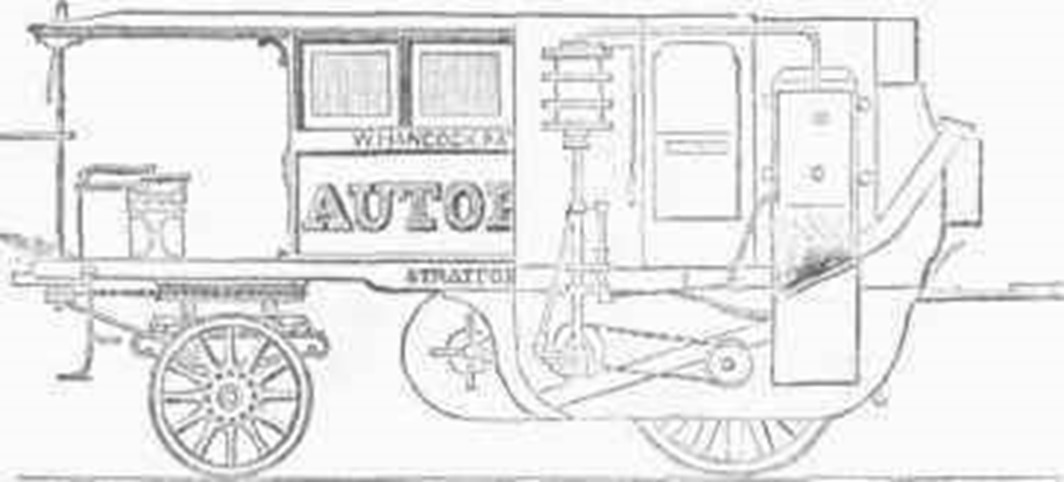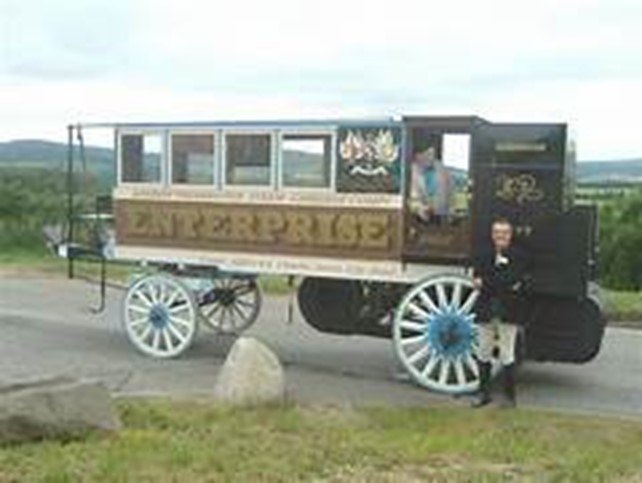

In the 1800s steam carriages where being designed to replace horsepower. In Stratford in East London an inventor called Walter Hancock was doing just that. Between 1824 and 1836 Hancock constructed several steam-powered road vehicles. In 1827 he patented a steam boiler constructed with separate chambers of thin metal which could split rather than explode, a safety measure for operators and passengers. In 1829 he built a small 10 seat bus called the infant with which in 1831 he began a regular service between Stratford and central London. On 31 October 1832, the infant took an experimental trip to Brighton. This vehicle was later made famous by its revenue earning journeys between London and Brighton, which were a British first, and demonstrated its usability by successfully ascending a frozen slope of 5 degrees where horse-drawn coaches were struggling. In 1833 Hancock’s new steam omnibus named the Enterprise (built for the London and Paddington Steam Carriage Company) began a regular service between London Wall and Paddington via Islington. It was the first regular steam carriage service and was the first mechanically propelled vehicle specially designed for omnibus work to be operated. In 1836 Hancock introduced a twenty-two-seater carriage called the Automation which ran over 700 journeys between London and Paddington, London and Islington, and Moorgate and Stratford, carrying over 12,000 passengers in total and regularly travelling at 12 to 15 miles per hour, with a top speed of more than 20 mph. In April of 1833 trials of another new steam carriage began called the Era. At the end of 1833 Hancock Introduced the Autopsy a smaller vehicle. By 1840, however, the development of steam-powered road vehicles had lost impetus and the heavy road tolls imposed by the Turnpike Acts had turned inventors away from steam. Hancock was forced to give up the struggle, and the way was left clear for the operators of horse buses. In 1842 he proposes a submarine cable from England to France for the telegraph. Consists of seven wires covered with gutta percha. In 1843 he patents the cutting rubber into sheets, and for a method of preparing rubber solutions. By 1844 he was made bankrupt, however, in 1845 he began to manufacture gutta percha in Stratford with his brother Charles Hancock. Finally in 1848 he patented with his brother the method of coating electric cables with gutta percha and set up an old workhouse in Westham to manufacture this.