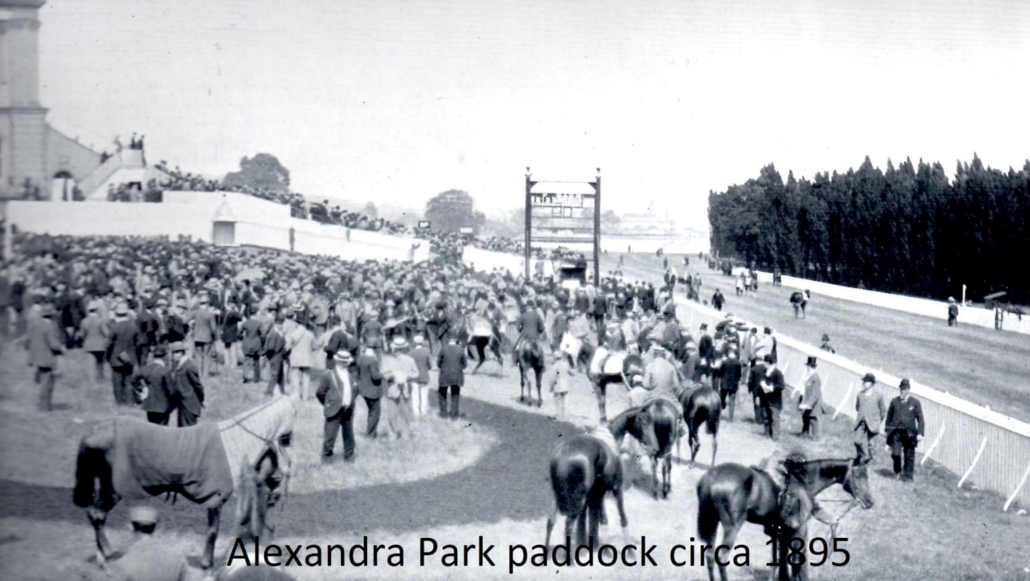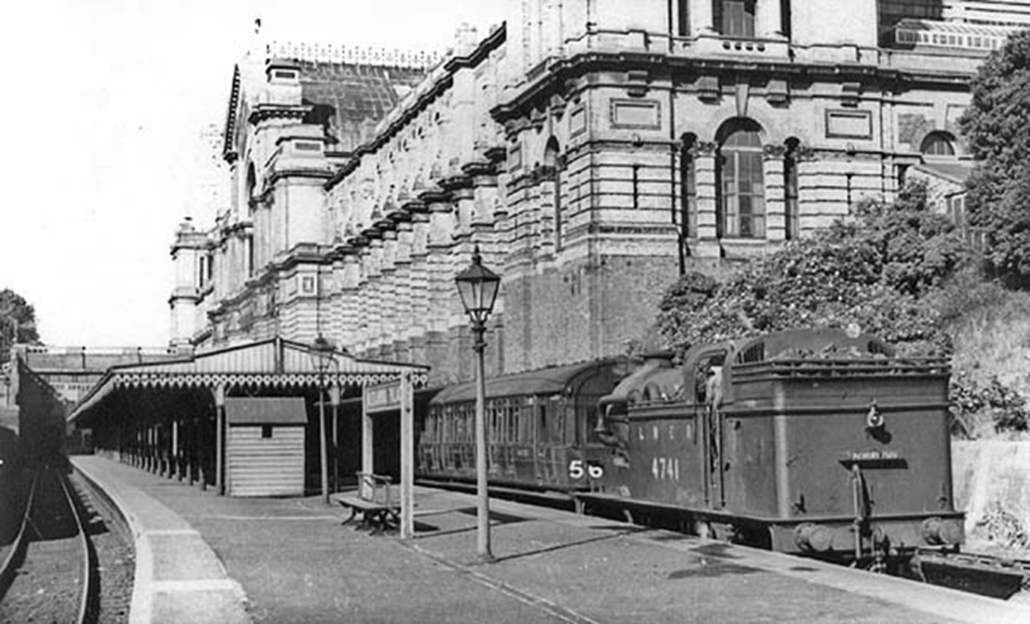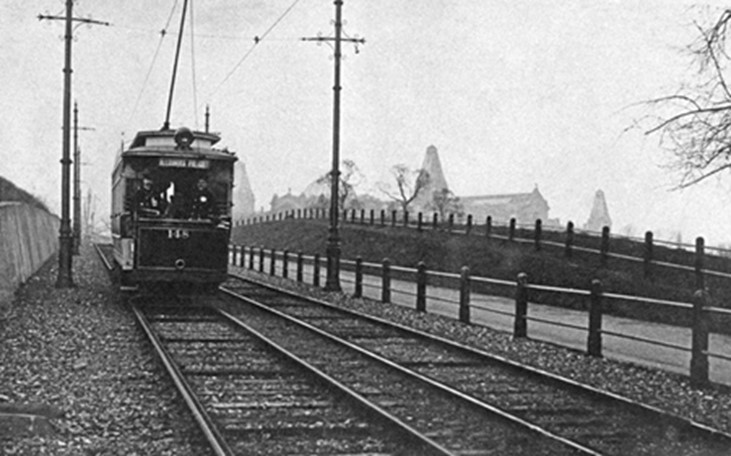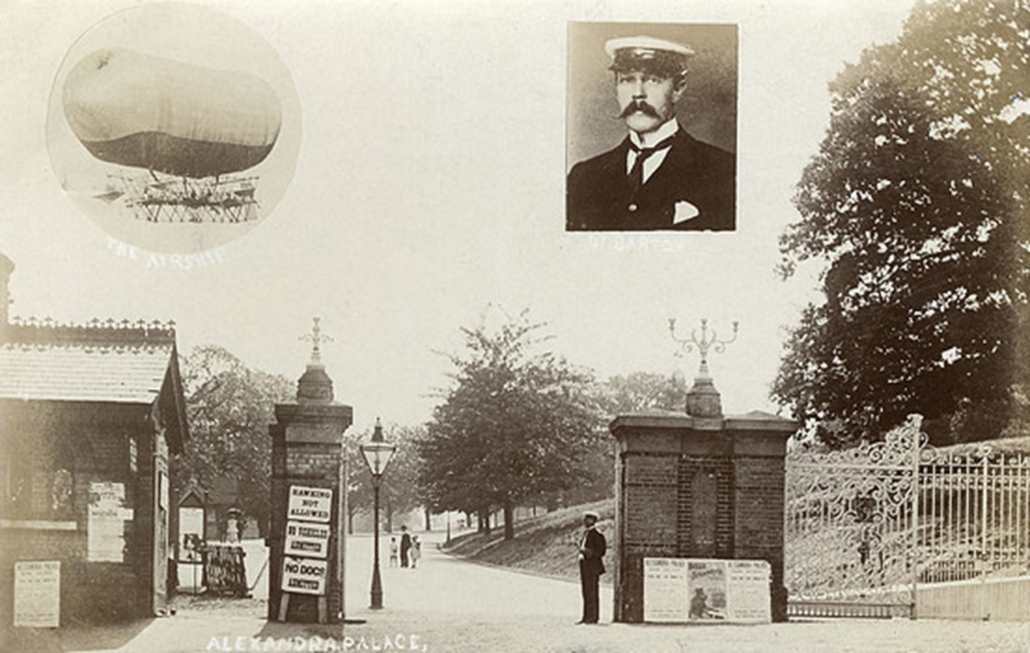
Alexandra Palace was built on the site of the old Tottenham Wood and is situated on the west side of the Lea Valley corridor. It was opened in 1873 with its purpose to serve as a public centre of recreation, education, and entertainment to rival the Crystal Palace in South London. In 1935 part of the palace was leased to the BBC for the transmission of their television service which happened in 1938 and was the first broadcast of its kind. Alexandra Palace continued to be used by the BBC for many years and its radio and television mast is still in use today. The grounds of the palace also once included a horse racing course with a grandstand which was nicknamed the “Frying Pan” and the “Pan Handle” because of its layout. It was London’s only racecourse and closed in 1970.In the early 1900s an airship was constructed in the palace grounds by a Dr Barton. The balloon of the airship was made of two layers of tussore silk varnished with linseed oil and was 180 feet long and 40 feet in diameter, pointed at one end and tethered to the car with webbing lines. It took 50 tons of iron filings and 600 carboys of sulphuric acid to generate sufficient hydrogen to inflate it and the cost of doing so with labour was £400. The Trustees of Alexandra Palace invited the public to attend its first flight on 22nd July 1905 and they and many representatives of the War Office and Aero Club saw it take off at 5.10.pm. Barton and his six companions flew in a north easterly direction, eventually coming to land in a potato field at Romford an hour later. The jubilant rush of the crew to congratulate each other, destabilised the craft necessitating the use of a ripping valve to release the gas, and this split the balloon. The craft would fly no more. Another piece of aviation history happen at in 1907 when the aviator A.V.Roe flew his model aircraft from the hights of the palace grounds winning the Daily Mail prize of £75.00 for this achievement. This was the start of things to come from him. In 1873 the Great Northern Railway arrived at the palace with a station sited behind the building. It was intended for this line to be electrified but this was never completed, and the station closed in 1954. Later in 1989 London’s first electric tramway was constructed on the east side of the grounds. Today with many poplar events being held at the palace I am sure that the closing of its railway link was somewhat short sighted. I am also sure that there are more other stories to be told about the Lea Valley Palace.