Builders of London Buses and Commercial Vehicles 1912-1933
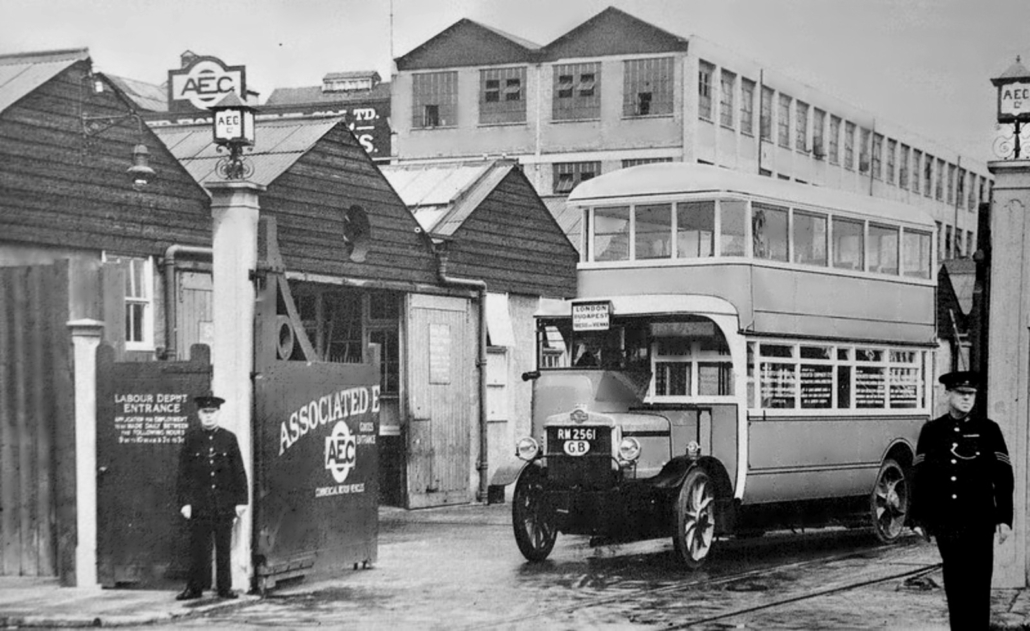
As the company began to grow, World War One started in 1914. This brought the development of motor buses in Britain to a grinding halt. By then, the company had been constructing about 28 new B Type buses a week, with a total of 3,000 finally being constructed. Not all of these were open-top double-deckers, but charabancs, single-deckers, lorries and parcel vans, which were all being designed and constructed around the B Type chassis.
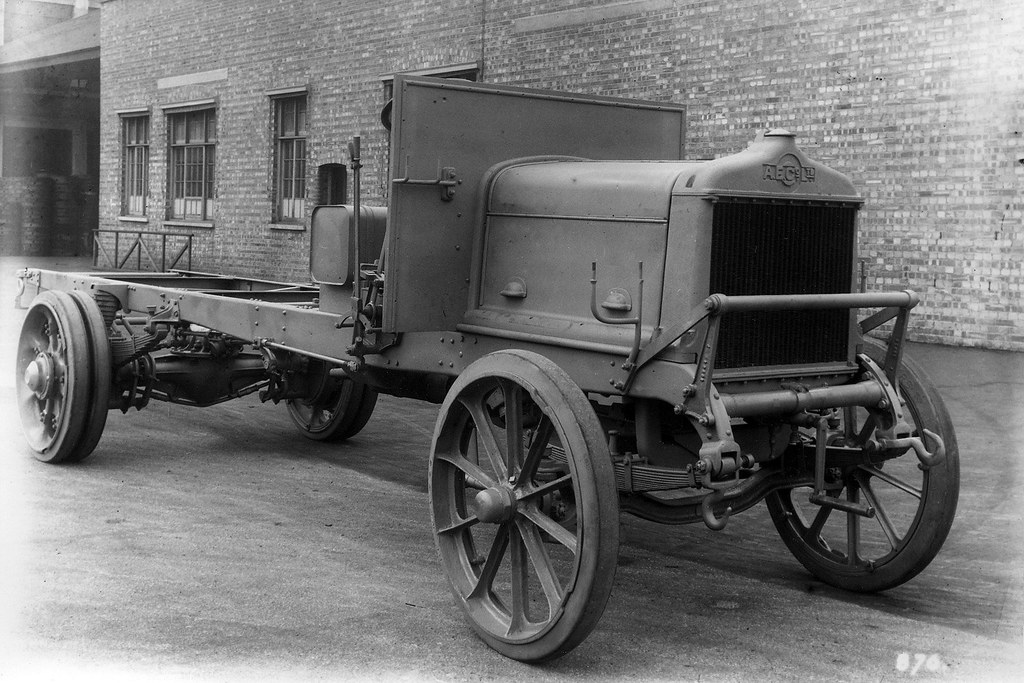
The war years started to see a severe test for the vehicles and those at Walthamstow responsible for their production. The B Type bus was adapted as a troop carrier, with some 1,300 being acquired by the War Department. Most of them saw service in France, hence the famous saying “Born in Walthamstow, died in France”. 300 were employed for defence work in London. During this wartime period, the buses received the nickname of “The Old Bill Bus”; However, a far greater test was now placed on the company as it was now entrusted with the production of thousands of trucks for military duties. A new robust pressed steel frame vehicle was required to be powered by a 45hp petrol engine and have a four-speed crash gearbox which would be able to carry a heavy load. Enter the Y Type 3–4-ton truck. By the end of the War in 1918, 10,000 had been constructed in Walthamstow, which represented 40 per cent of the total vehicles built for the three Armed Forces.
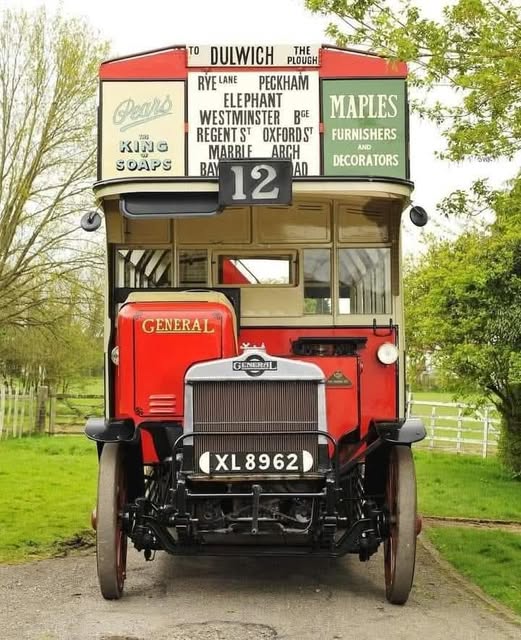
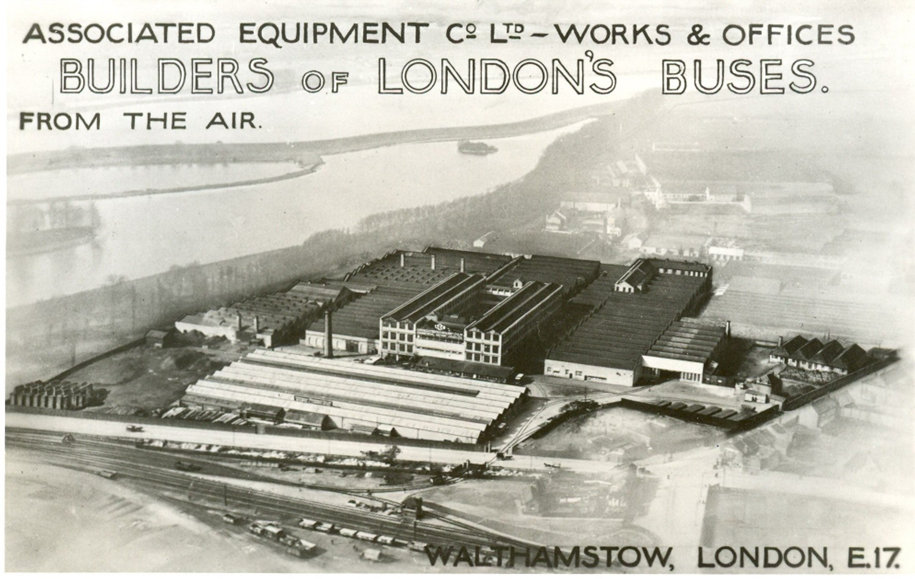
By then, the factory at Walthamstow had again been expanded and with this came a moving trackway assembly line which was virtually unique in Britain at that time. It was also stated that the company then produced a new vehicle every 30 minutes. The factory had now grown from a workshop area of only 3000 square feet to an amazing 483,000 square feet. With the war now over the task of re-equipping London’s bus fleet was embarked upon. The company then decided that it was going to promote its products to the world market. This resulted in a new sales and advertising department being established. It was now time for new types of buses to be designed by the company. The first of these was the K
Type in 1919, which had 12 more seats than the B Type and a 28 hp engine being mounted for the first time on the right of the driver. We are now entering the final phase of the factory at Walthamstow, as it became just too small for the company to continue its existing operations there.
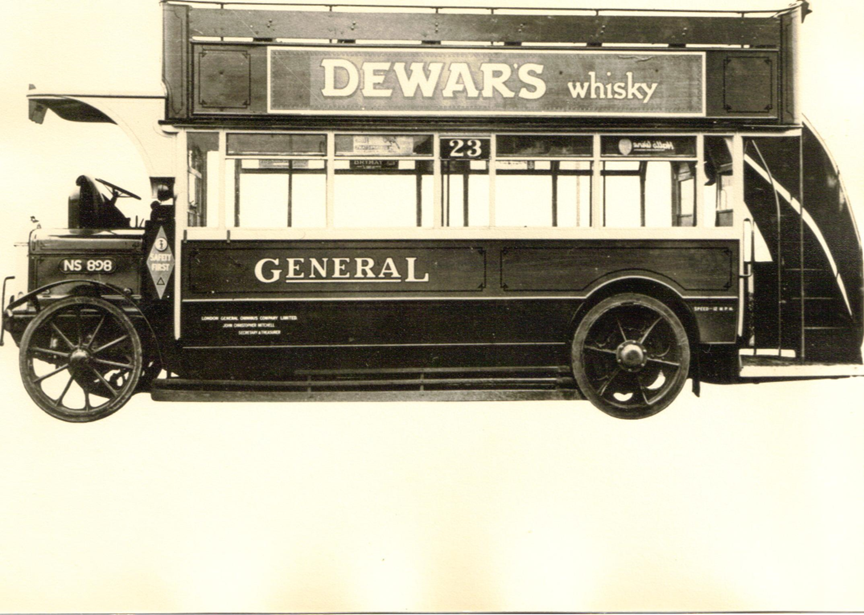
Before the factory closed in 1927, many more different models of vehicles were constructed at Walthamstow. 1922 saw another type of bus design, which was called the S Type. The S Type model 403, as it was known, had a new, advanced 45 hp engine. The Y Type truck model 501 continued to be produced. 1922 saw the first types of AEC trolley buses beingproduced at Walthamstow.
The model’s chassis was a mixture of a 403 and 501 chassis design and is regarded as the forerunner of the different modes of trolley buses that were built afterwards. New bus designs continued to be developed and in 1923, the NS Type model 405 appeared, which was the last type of bus to be produced at Walthamstow. Although the factory appeared to close in 1927, an arm of the company which built tractors continued to use the site until 1933.
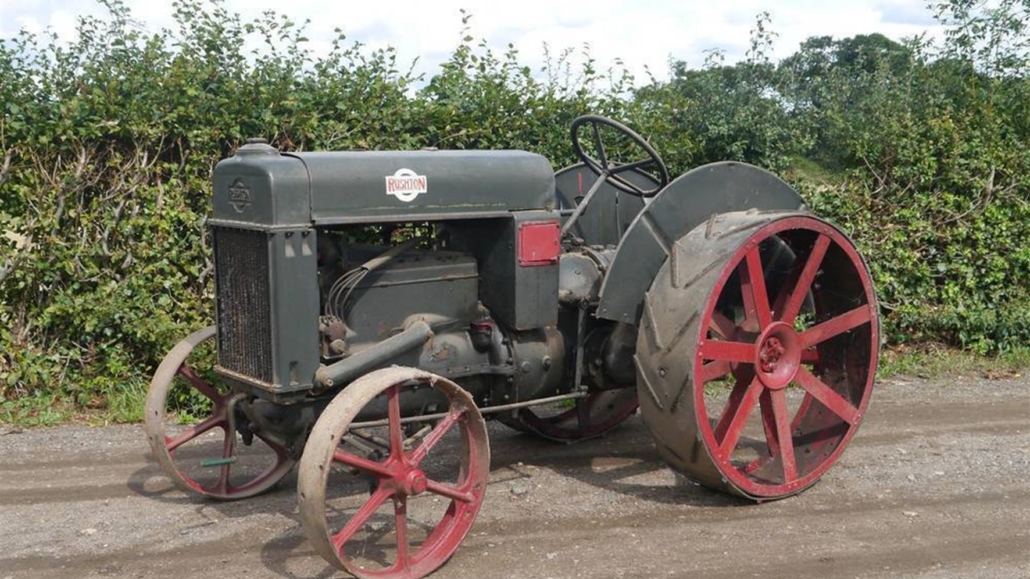
George Rushton, who worked as an engineer for the company, persuaded his employers to let him design a tractor that would be able to compete with Henry Ford’s ubiquitous Fordson. Rushton’s first tractor appeared in 1928 as the “General”, but this was soon changed to the “Rushton”. Many parts on the Rushton were interchangeable with those of the Fordson, but it also offered some advantages over the latter, such as a larger radiator, magneto ignition and increased power, “Almost 24 hp compared to around 21 hp for the Fordson”. Several Rushton conversions were produced by various firms, including a full-track conversion with Roadless tracks, a roller conversion by Taskers and several industrial variants from Muir-Hill. However, sales of the Rushton were not forthcoming, perhaps due to the higher price than the
Fordson or the effects of the depression, and tractor production ended in 1933.