
Stratford Railway Works Locomotive Builders
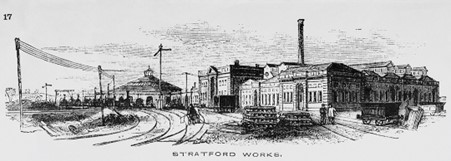
2025 marked 200 years of railway development in Britain, yet very few people are aware of the historic achievements in this field in the Lea Valley. Strafford Railway Works was once the largest in Britain, and in this Section, we identify just three of these achievements. Stratford Works became the home of several notable engineers and superintendents, who were responsible for introducing many new ideas and much technical innovation. One such superintendent was James Holden, who is noted for many firsts in early locomotive design and development.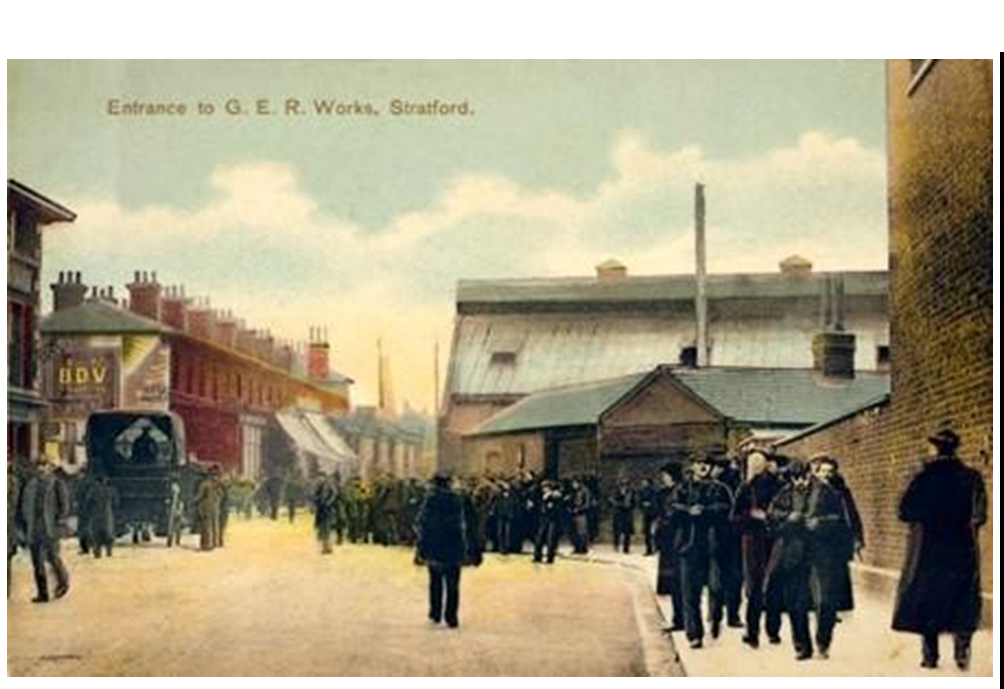
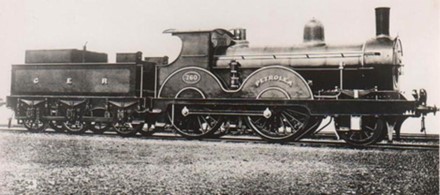
Petrolea Britain’s First Oil-fired Steam Locomotive
The first of these was in 1887, with the construction of Britain’s first oil-fired steam locomotive, called Petrolea. Holden came up with an idea that instead of discarding waste oil into the River Lea, he would burn this as a replacement of coal to fire up his engines.
The Fastest Construction of a Locomotive in the World
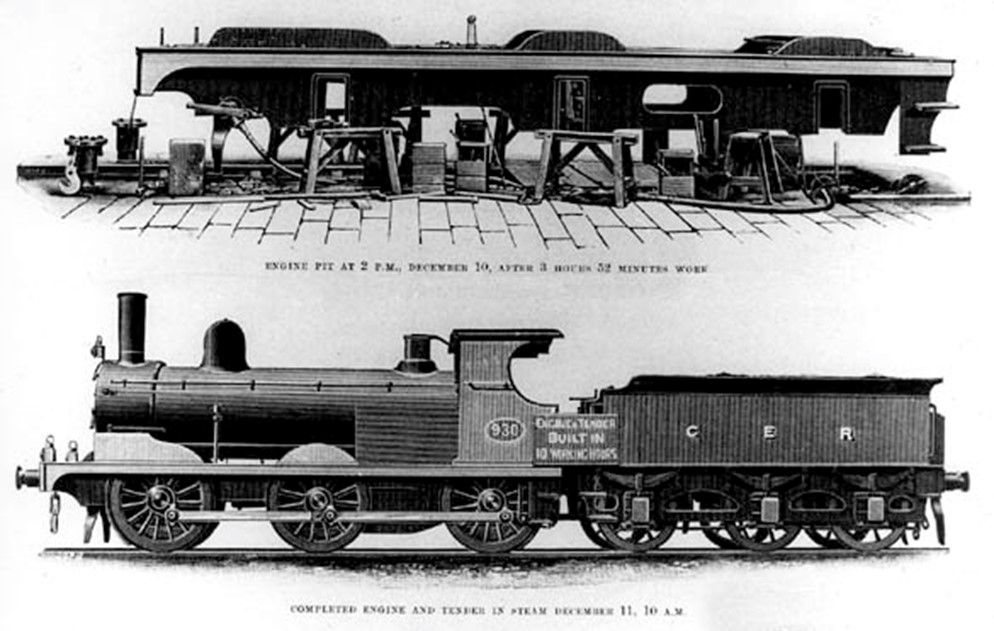
Over the years, the rivalry between railway companies had always been competitive, in both speed and construction time, with each company trying to be better than the other. In 1888, one of Stratford’s rival works, Crewe, of the London and North-Western Railway, built an 0-6-0 locomotive in twenty-five and a half hours, then a British record. Not to be outdone, Holden took up the challenge, and in December 1891, the time for the construction of a 0-6-0 locomotive was reduced to nine hours and forty-seven minutes, which is still a world record today. Not only did he reduce the time of construction, but he also gave the engine a coat of grey paint and sent it straight into regular service. What’s even more remarkable is that the locomotive covered some 36,000 miles before returning for another coat of paint and a service. Following 43 years of service and covering 1,127,750 miles, regrettably, the locomotive was scrapped in 1935. This achievement was a world record that has never been beaten.
The 0-10-0 Decapod Locomotive
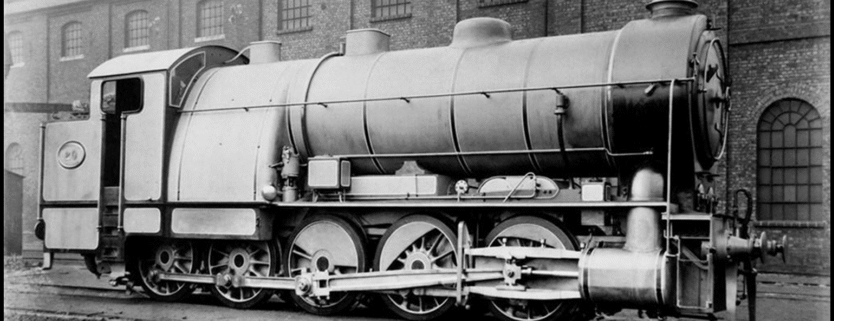
In 1902, Holden constructed the world’s most powerful steam locomotive, the 0-10-0 Decapod, at that time. Its main design aim was to prevent the onslaught of electric trains out of Liverpool Street, the Great Eastern Railway terminus. It could reach a speed of 30mph in 30 seconds with a train load of 300 tons in tow. Holden, however, never did succeed with his objectives as the locomotive was far too heavy to run on most of the region’s local lines. After tinkering with its design, the locomotive was finally scrapped.


