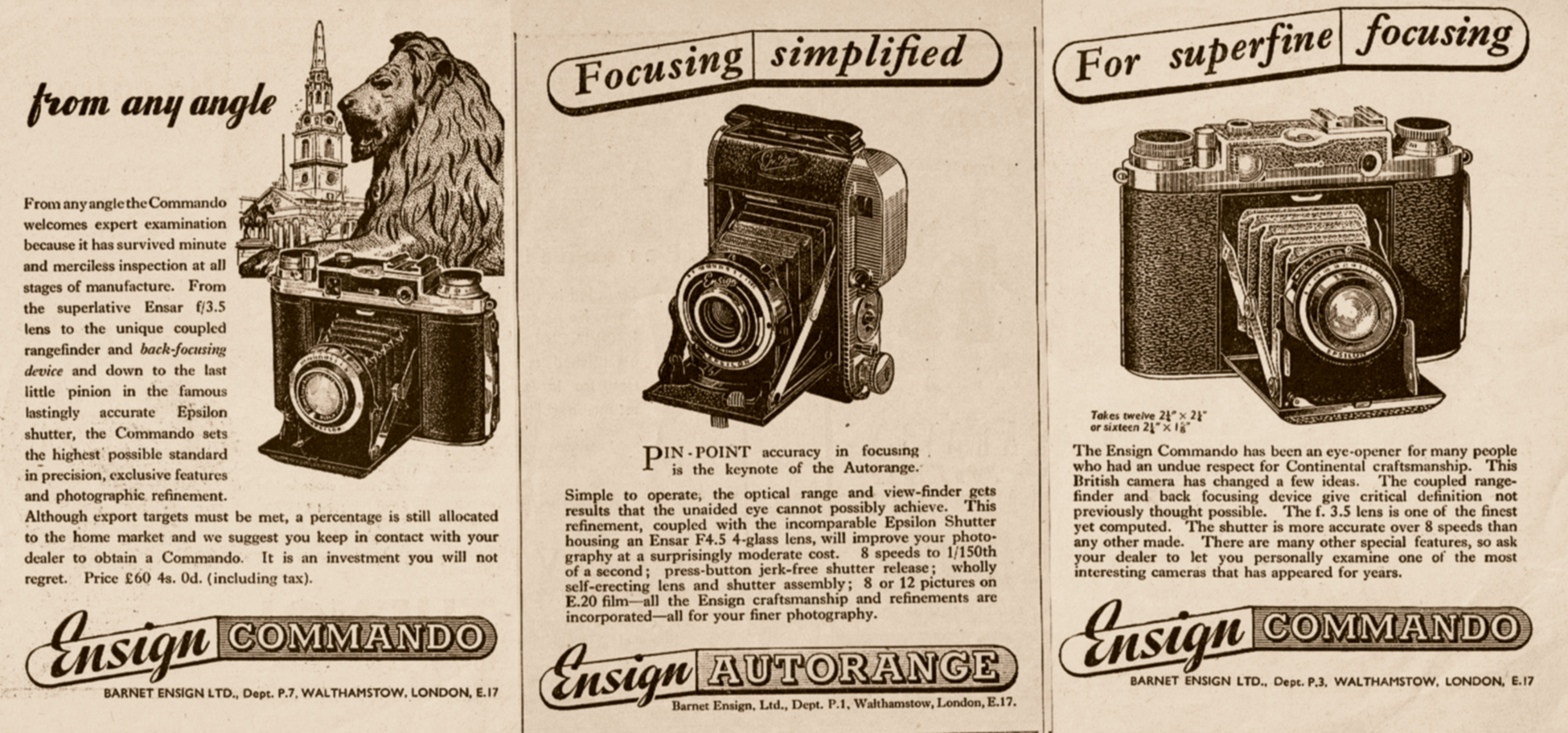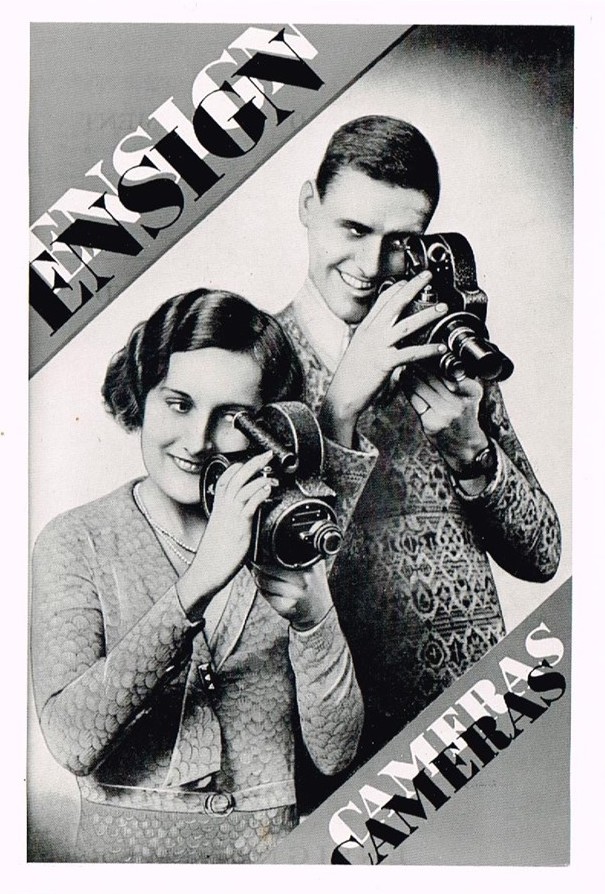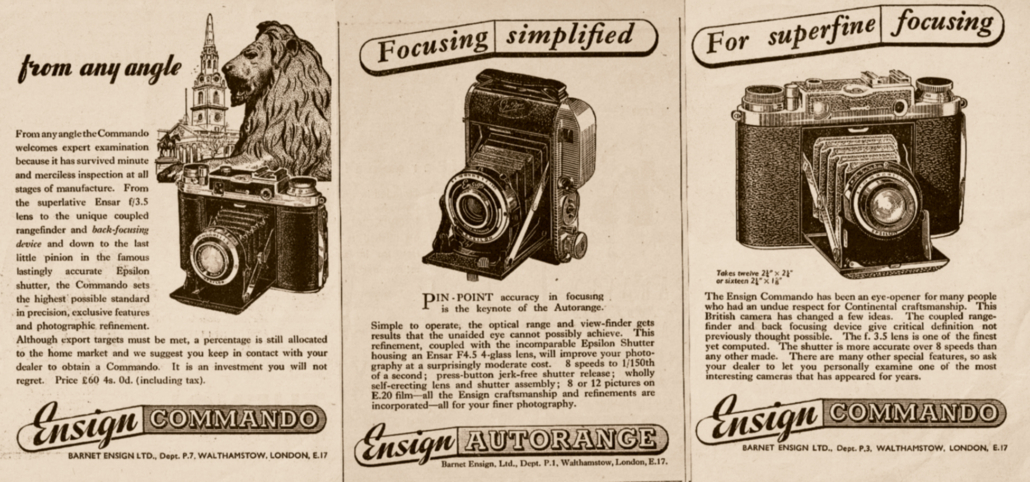
In 1930 the Houghton-Butcher Manufacturing Company established a selling arm called Ensign Limited. By then the company was based at a new factory in Walthamstow and kept the name Houghton and Butcher Manufacturing Company Limited until 1945. This new trading company kept many of Houghton’s and Butcher’s camera ranges. In 1939 the company introduced the Ensign Ful-Vue box camera, one of the most popular cameras of its time in the United Kingdom. In 1940 the headquarters of the trading company at Holborn were destroyed by an air raid in September. In October 1940 the assets of the company, including enlargers, epidiascopes and cine-cameras, were taken over by Johnson and Sons Manufacturing Chemists, however the trademark Ensign was kept by the manufacturing company Houghton and Butcher Manufacturing Company which assumed the advertising and distribution of the Ensign cameras alone until 1945 when Houghton and Butcher Manufacturing Company entered into an amalgamation with the film maker Elliott and Sons (maker of the film brand Barnet) and became Barnet Ensign. 1948 saw Ross Limited. amalgamate with Barnet-Ensign Limited. to form Barnet Ensign Ross Limited. it was believed that with the addition of Ross’s quality lenses to their existing range of cameras Barnet Ensign Ross. would become a force to be reckoned with. Stating in their own publicity handout; ” It seems, that in fact, beyond doubt that because of, the Barnet Ensign Ross alliance the focus of photographic progress has shifted from the continent to Britain. By 1955 Ross and Ensign had moved production from Walthamstow to Ross’s Clapham Common factory, where they continued to produce cameras along with lenses and binoculars. Ensign produced some of the best examples of folding roll film cameras available in the fifties. Ensign was constantly battling against the public belief that foreign cameras particularly those made in Germany were of better quality than British made cameras. By single mindedly attempting to develop high quality folding roll film cameras which would compete with these German companies they exhausted their research and development budget. The company completely ignored the public’s growing interest in 35mm cameras never producing even a prototype 35mm camera, believing so strongly that the larger format of 120 roll film was superior and would never be surpassed. In a typically British way, they looked back at their fine traditional range of cameras with pride, completely ignoring the changes in the camera industry and retail trade until it was too late. Ensign cameras were expensive and beginning to look old fashioned. Sales dropped too low to fund the research needed for new designs and Ross and Ensign found it could no longer compete with the new 35mm cameras being imported from Germany and the then expanding camera manufacturers of Japan. By 1961the name Ross Ensign brand had faded away into history A fuller history of the company can be found on the website Houghton and Ensign A Short History by the late Adrian Richmond.