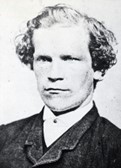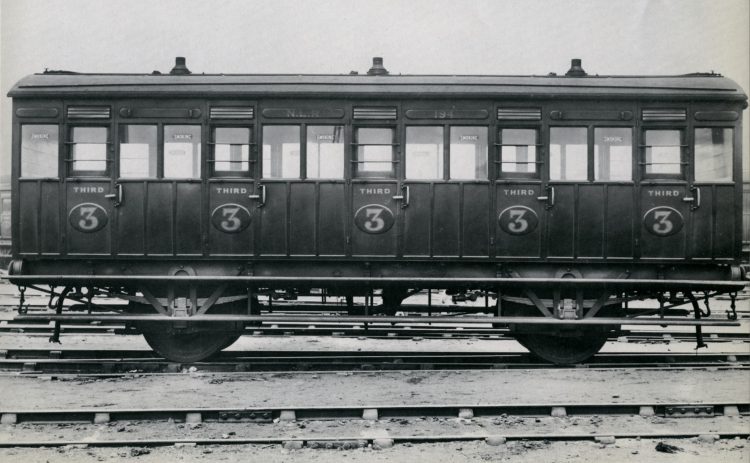
The murder of Thomas Briggs by the young German, Franz Muller, is a well-documented case. Briggs, who was sixty-nine years old, held a senior position with a London city banking firm.
The Night of the Murder
On Saturday, 9th July 1864, Thomas Briggs boarded the 9.45 pm train from Fenchurch Street to Hackney, travelling in a first-class carriage. When the train arrived around 10 p.m., his compartment was found covered in blood. About twenty minutes later, an engine driver on a train travelling in the opposite direction discovered Briggs, severely injured, lying between the railway tracks. Two surgeons who examined him determined that he had suffered approximately six violent blows to the head. With no hope of recovery, Briggs was taken to his home, where he passed away later that evening.
The Pursuit and Capture of Franz Muller
Following a Trans-Atlantic pursuit, Franz Muller was apprehended. With the assistance of the railway police, Muller was brought to Bow Street Police Station, where he was formally charged with the murder of Thomas Briggs.
The Trial and Verdict
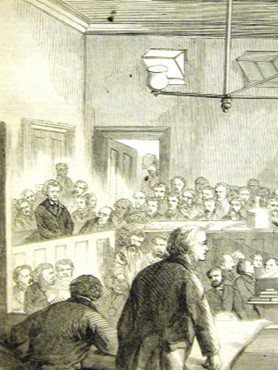
The trial began at The Central Criminal Court on 24th October 1864, with Muller entering a plea of not guilty. The judge and prosecution barristers were notable figures, and the case against Muller was presented in detail by a series of witnesses. The judge was evidently convinced by the strength of the evidence, as was the jury, who took only fifteen minutes to return a verdict of guilty. Muller was then sent to Newgate prison to await execution. The case dominated newspaper headlines across the country.
Muller’s Confession and Execution
As the executioner prepared to hang Muller, a minister asked once more, “Are you innocent or guilty?” Just before the lever was pulled, Muller is reported to have said in German, “Yes, I did it.”
Over 50,000 people gathered to witness the execution. The event was marked by widespread scenes of drunkenness, fighting and theft.
Aftermath and Legacy
Later in 1864, as a direct result of this murder, “Muller lights”—small windows between railway compartments—were introduced to enhance passenger safety. These windows were named after the 1864 murderer, Frederick Müller.