
Frederick William Bremer and His Invention
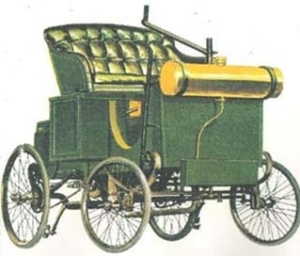
In 1892, Frederick William Bremer (born 1872) built Britain’s first four-wheeled motor car powered by an internal combustion engine in Walthamstow. The son of a German immigrant, Bremer lived with his family on Connaught Road, where he assembled the car in a backyard workshop. He described himself as a plumber, electrician, engineer, and bicycle maker, and he constructed the car for his enjoyment rather than for commercial reasons.
The Early Days of the Bremer Car
There are accounts that Bremer may have previously built a gas-powered vehicle, but his only petrol-driven car first took to the streets in 1892, preceded by someone carrying a red flag.
Exhibition and Preservation
By 1912, the car was exhibited at the First British Motor Museum on Oxford Street in London. When the museum moved to Crystal Palace in 1914, the Bremer car was also relocated. At one point, Bremer even considered scrapping the vehicle, but it was ultimately saved when Vestry House Museum opened in Walthamstow in 1933, and the car found a permanent home there. The car is currently on show at Beaulieu National Motor Museum, whilst the Vestry House Museum is being refurbished.
Restoration and Rally Participation
After a major restoration in 1964, the Bremer car was entered as car number 1 in the London to Brighton Veteran Car Run, but unfortunately, the crankshaft broke after just 17 miles. The following year, the car participated again and completed the 54-mile journey in just under eight hours.
Legacy and Inspiration
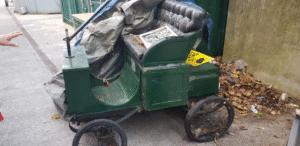
Frederick Bremer passed away in 1941 and is buried alongside his wife Annie at St Mary’s Church in Walthamstow. The legacy of his pioneering vehicle, together with other local transport milestones, has inspired numerous historic vehicle rallies. As a tribute to Bremer, students at the Frederick Bremer School in Walthamstow constructed a full-size replica of his car.