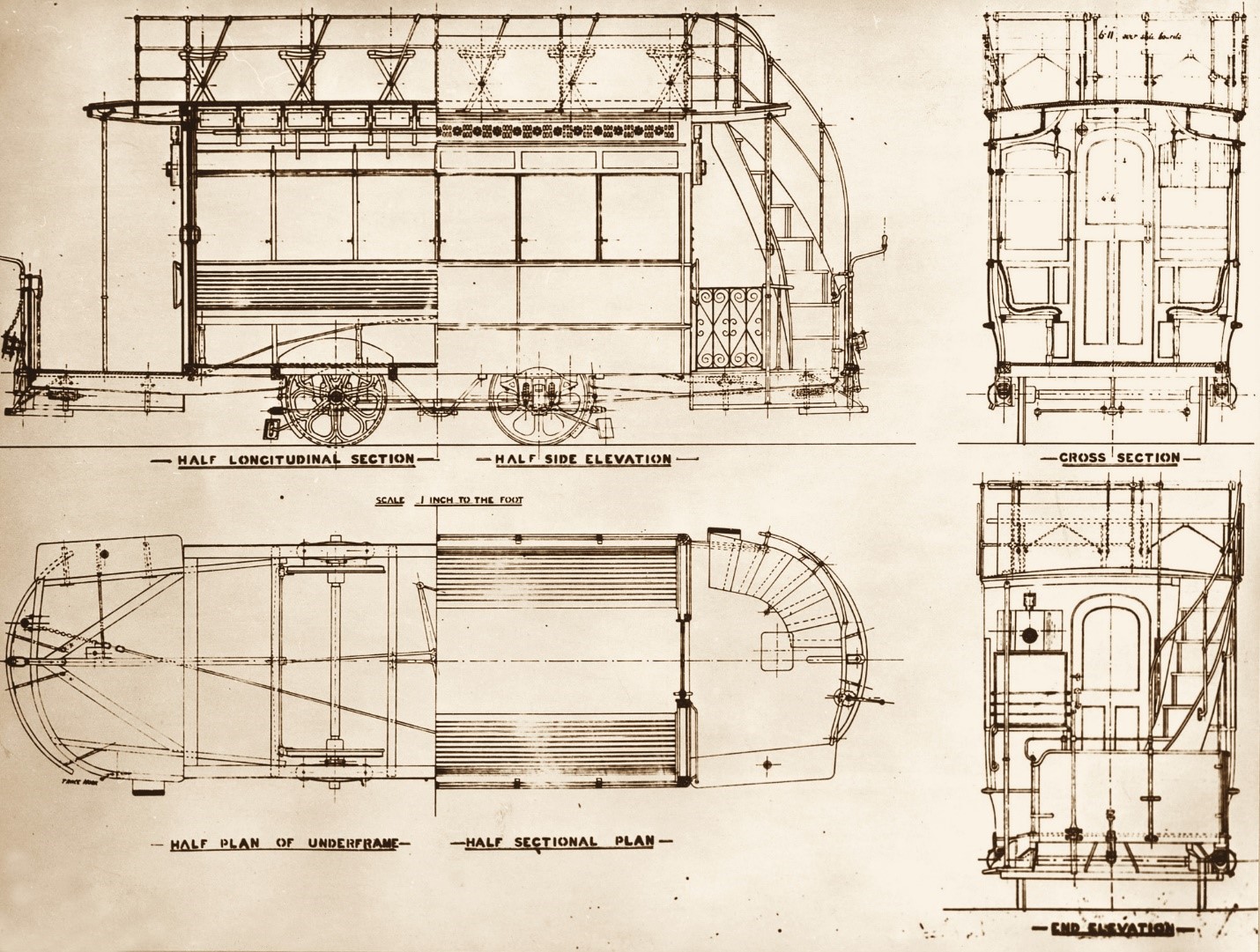
The late 1800s saw the rapid expansion of tramway development across East London. The North Metropolitan Tramways controlled the operations in Leytonstone where it had set up a works which was involved in the construction or trials of numerous experimental trams. One of these and probably the most innovative of British tramway developments occurred in 1882 with the introduction of the first known form of battery electric street traction in the United Kingdom. The Faure accumulator car as it was known was designed by Mr. Radcliffe Ward for the Faure Accumulator Company. This vehicle was a converted horse tram. Other notable achievements include in 1877 the Merryweather and Sons Company had experimental steam tram locomotive trials along the tramway from Stratford to Leytonstone towing a normal horse tram car. In1881 Colonel F.E.B. Beaumont experimental compressed air tram locomotive also held trials on the tramway between Stratford to Leytonstone. Colonel Beaumont had other interests in air-driven machinery. His boring tunnel machines were use in the test tunnels for the original Channel Tunnel scheme. He also advocated the use of compressed air to drive these trains through his tunnels, but nothing came of his idea as these tunnels were never completed. In closing the tram works at Leytonstone in later years came under the control of the London County Council. Many trams continued to be constructed there for several years including the preserved E1 Class tramcar No 1025.