In the early 1900s, there was increasing interest in aviation in Britain, and prizes were offered for the construction of experimental flying models to encourage advancements in aviation development. A prize of £75 was offered by the Daily
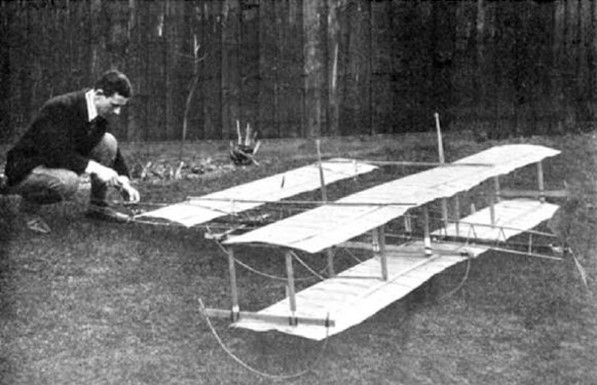
Mail newspaper for the construction of a flying model that must weigh no more than fifty pounds and could fly higher than fifty feet. In 1907, a competition was held at Alexandra Palace in North London, which was won by the now famous aviator Edwin Alliott Verdon Roe (1877-1958).
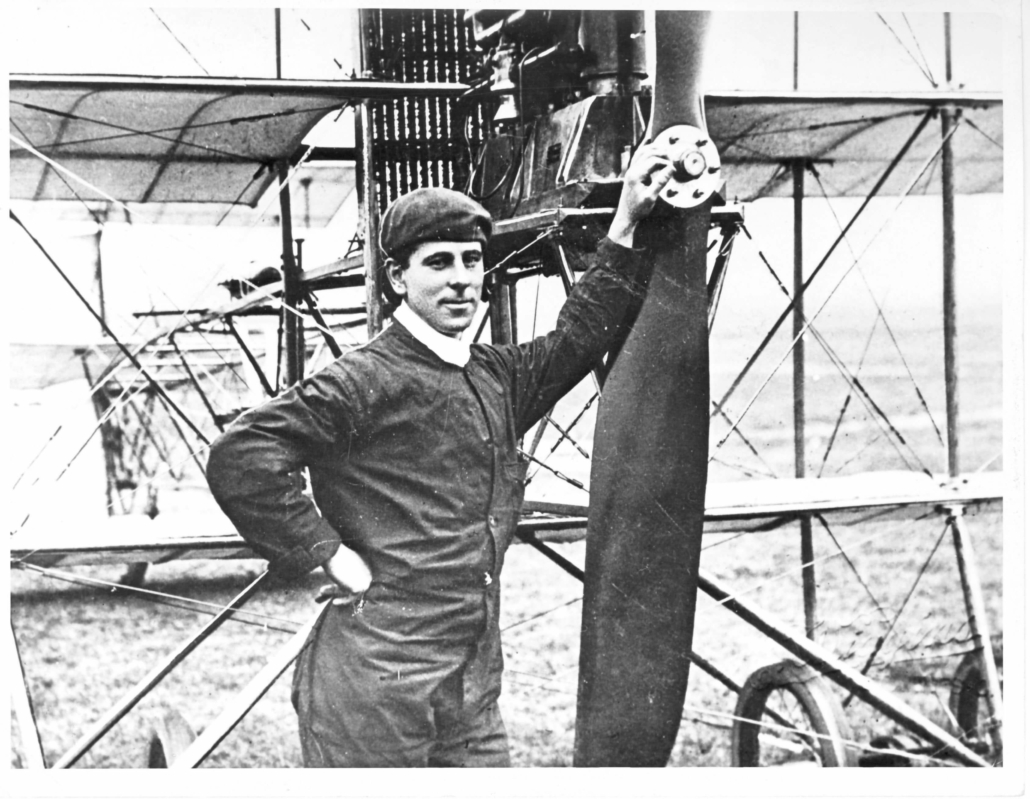
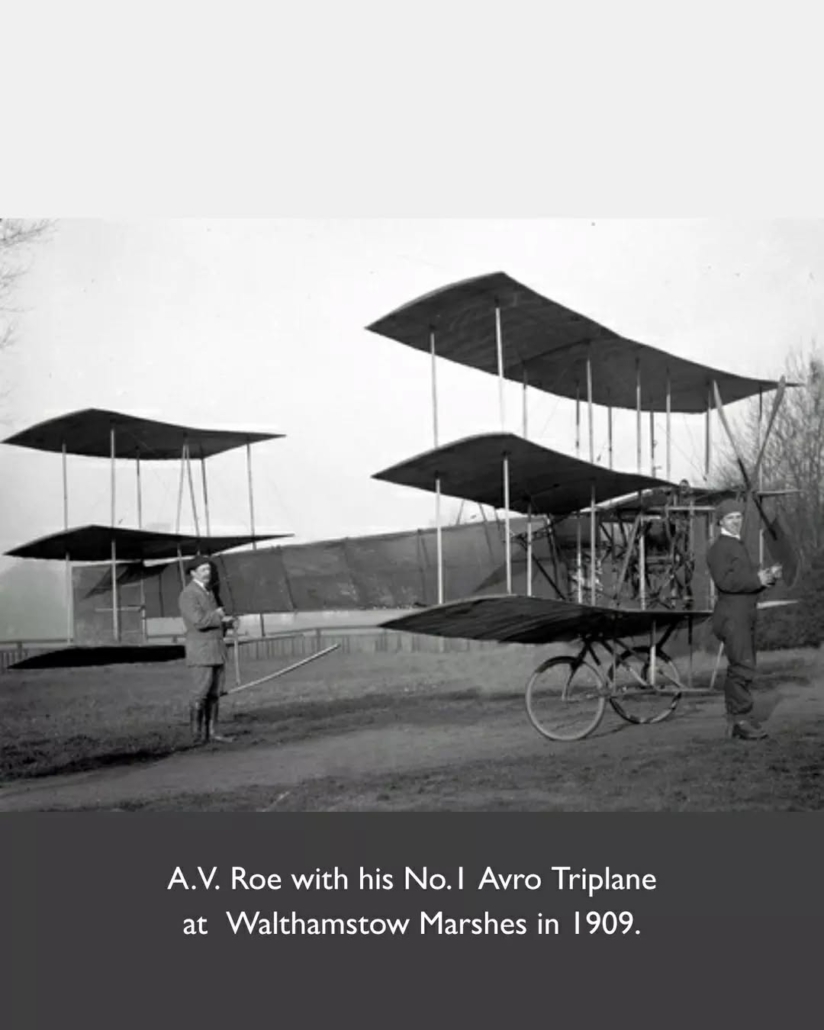
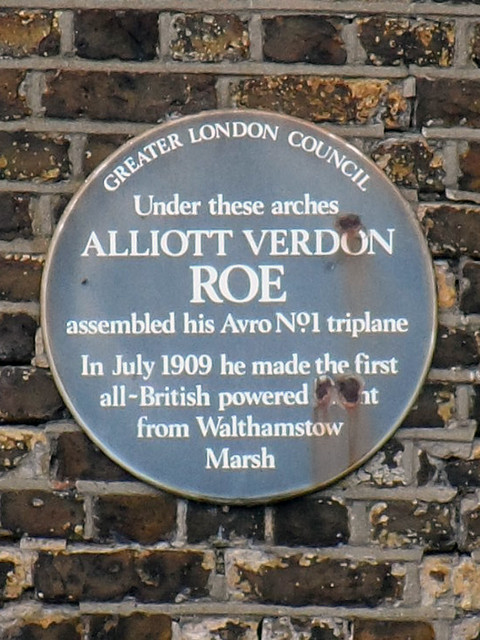
In 1908, Roe had at last found a partner to finance the building of a full-size aeroplane. John Alfred Prestwich (1874-1952), who became famous for his JAP engines, invested some £50 into the new company, which was called the J.A.P. Avroplane Company. The partnership failed due to many arguments over what type of plane should be built, a triplane or a monoplane. Not being deterred by this setback, Roe constructed his triplane underneath the Great Eastern Railway viaduct arches on Walthamstow Marshes in London. In 1909, he became the first Briton to pilot and fly an all-British-built aircraft on the Marshes. The aircraft’s engine was also British-built, which was manufactured at his former partner’s factory in Tottenham, London. The plane was painted bright yellow with the words AVROPLANE in bold letters on the side, along with the name BULLS EYE, which was the brand company that his brother, Humphrey Verdon Roe, also then a partner, owned. Was this the first form of advertising on the side of an aircraft? Roe then decided to mass-produce some of his planes, and the AVRO Aviation Company was formed in 1910. In 1929, he was knighted for his services to the development of aviation. Roe then decided to sell the company to set up a new partnership with John Lord in a company called Saunders Roe. The Saunders Roe Company mainly concentrated on producing flying-boats, but they were produced in very large quantities. The name of AVRO and the company continued over many years, producing various unique types of aircraft, the 504, the Lancaster and the Vulcan bombers being just a few.
A commercial model of the Lancaster, the Lancastrian, was the first commercial aircraft to fly from Heathrow, London. The Lancaster bomber was also adapted in World War Two to carry the famous Barnes Wallis “dam buster” bouncing bomb, which was partly designed in the Lea Valley, at the Royal Gunpowder Mills in Waltham Abbey. It is said that AVRO, towards the end of its illustrious history, were approached by the Government to build a flying disc. This was built by AVRO Canada. Without Roe’s perseverance, the history of the world and aviation as we know it today could have been changed forever. He was one of Britain’s true pioneers and should never be forgotten.